
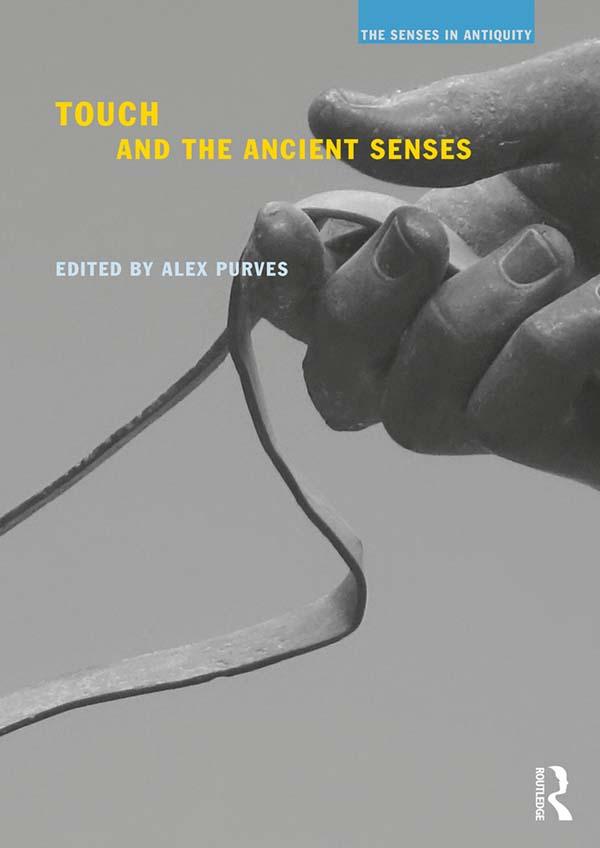
Unlike the other senses, touch ranges beyond a single sense organ, encompassing not only the skin but also the interior of the body. It mediates almost every aspect of interpersonal relations in antiquity, from the everyday to the erotic, just as it also provides a primary point of contact between the individual and the outside world. The essays in this volume explore the ways in which touch plays a defining role in science, art, philosophy, and medicine, and shapes our understanding of topics ranging from aesthetics and poetics to various religious and ritual practices. Whether we locate the sense of touch on the surface of the skin, within the body or – less tangibly still – within the emotions, the sensory impact of touching raises a broad range of interpretive and phenomenological questions.
This is the first volume of its kind to explore the sense of touch in antiquity, bringing a variety of disciplinary approaches to bear on the sense that is usually disregarded as the most base and obvious of the five. In these pages, by contrast, we find in touch a complex and fascinating indicator of the body’s relation to object, environment, and self.
Pay easily by card, Klarna, Apple Pay or Google Pay. Not happy? You always have a 14-day money-back guarantee. Read more in our terms. If you have any questions, email us at hello@memmo.org.
Memmo makes studying easier – wherever you are in the world. We bring your course books and smart study tools together in one place: summaries, quizzes, podcasts and flashcards. Plus Ted, your study buddy who answers anything you wonder. Over 75,000 students already study here – built to help you learn faster and stress less.