
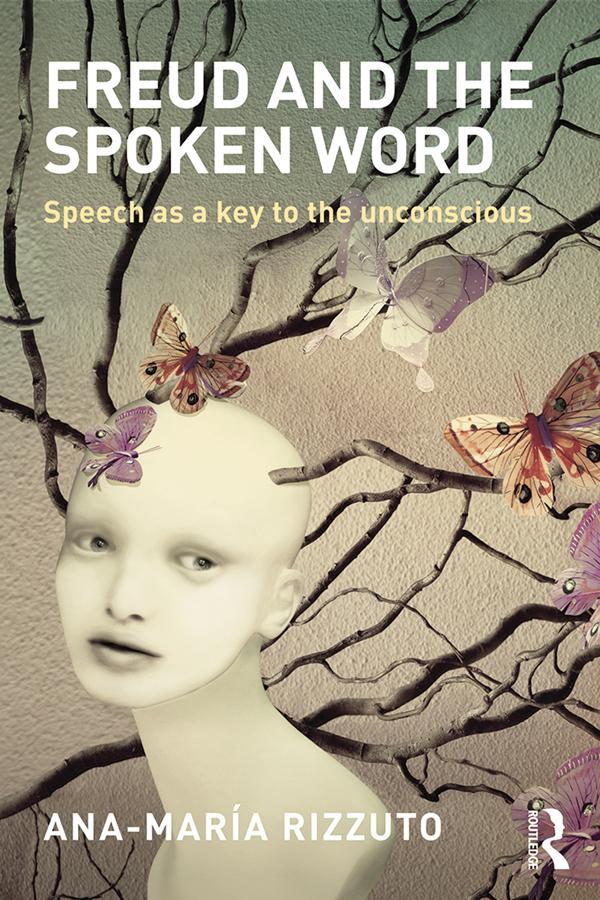
There is extensive literature on Freud and language; however, there is very little that looks at Freud’s use of the spoken word. In Freud and the Spoken Word: Speech as a key to the unconscious, Ana-María Rizzuto contends that Freud’s focus on the intrapsychic function and meaning of patients’ words allowed him to use the new psychoanalytic method of talking to gain access to unconscious psychic life. In creating the first ‘talking therapy’, Freud began a movement that still underpins how psychoanalysts understand and use the spoken word in clinical treatment and advance psychoanalytic theory. With careful and critical reference to Freud’s own work, this book draws out conclusions on the nature of verbal exchanges between analyst and patient.
Ana- María Rizzuto begins with a close look at Freud’s early monograph On Aphasia, suggesting that Freud was motivated by his need to understand the disturbed speech phenomena observed in three of the patients described in Studies on Hysteria. She then turns to an examination of how Freud integrated the spoken word into his theories as well as how he actually talked with his patients, looking again at the Studies in Hysteria and continuing with the Dora case, the Rat Man and the Wolf Man. In these chapters, the author interprets how Freud’s report of his own words shed light on the varying relationships he had with his patients, when and how he was able to follow his own recommendations for treatment and when another factor (therapeutic zeal, or the wish to prove a theory) appeared to interfere in communication between the two parties in the analysis.
Freud and the Spoken Word examines Freud’s work with a critical eye. The book explores his contribution in relation to the spoken word, enhances its significance, and challenges its shortcomings. It is written for psychoanalysts, psychotherapists, Freud’s scholars and academics interested in his views on the words spoken in life and in psychoanalysis.
Argentine born Ana-María Rizzuto trained in psychoanalysis in Boston and was for forty years in the PINE Psychoanalytic Center Faculty and is Training and Supervisory Analyst Emerita. She has made significant contributions to the psychoanalysis of religious experience and has written in national and international journals about the significance of words in the clinical situation. She has written three books and lectured about her work in North America, Latin America, Europe, and Japan.
Pay easily by card, Klarna, Apple Pay or Google Pay. Not happy? You always have a 14-day money-back guarantee. Read more in our terms. If you have any questions, email us at hello@memmo.org.
Memmo makes studying easier – wherever you are in the world. We bring your course books and smart study tools together in one place: summaries, quizzes, podcasts and flashcards. Plus Ted, your study buddy who answers anything you wonder. Over 50,000 students already study here – built to help you learn faster and stress less.