
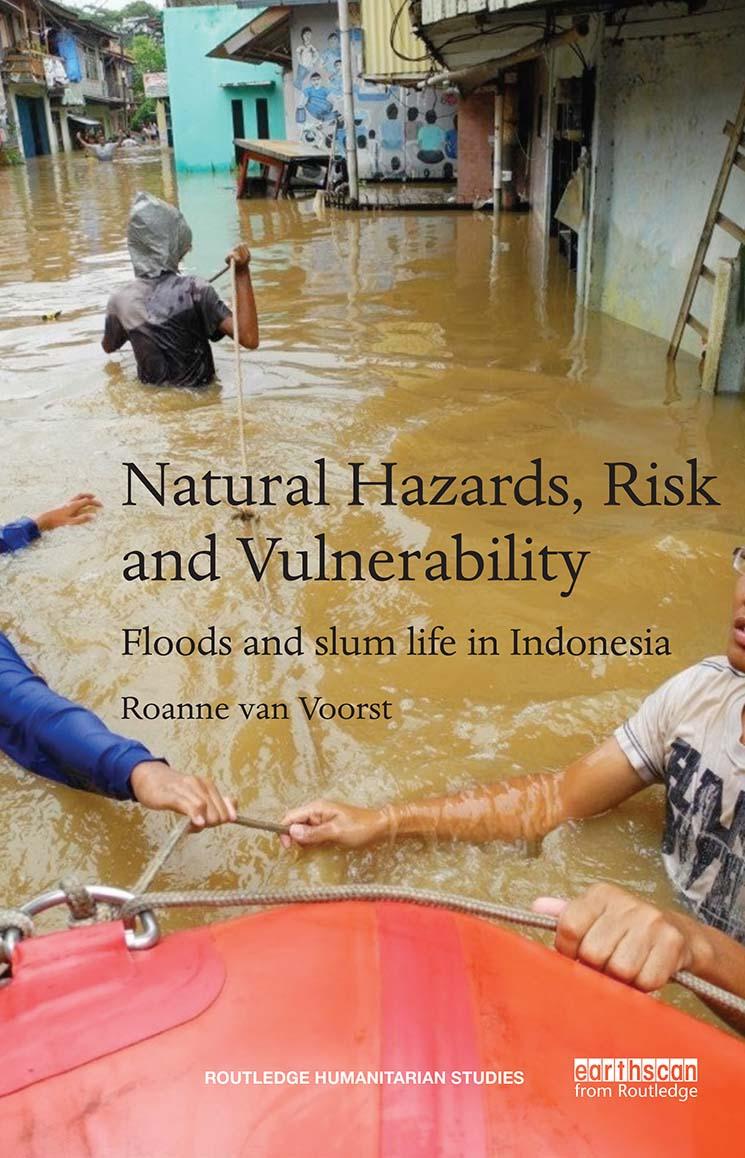
Different people handle risk in different ways. The current lack of understanding about this heterogeneity in risk behaviour makes it difficult to intervene effectively in risk-prone communities.
Natural Hazards, Risk and Vulnerability offers a unique insight in the everyday life of a group of riverbank settlers in Jakarta - one of the most vulnerable areas worldwide in terms of exposure to natural hazards. Based on long-term fieldwork, the book portrays the often creative and innovative ways in which slum dwellers cope with recurrent floods. The book shows that behaviour that is often described as irrational or ineffective by outside experts can be highly pragmatic and often effective. This book argues that human risk behaviour cannot be explained by the risk itself, but instead by seemingly unrelated factors such as trust in authorities and aid-institutions and unequal power structures. By considering a risk as a lens that exposes these factors, a completely new type of analysis is proposed that offers useful insights for everyone concerned about how people cope with the currently increasing amount of natural hazard.
This is a valuable resource for academics, researchers and policy makers in the areas of risk studies, disaster and natural hazard, urban studies, anthropology, development, Southeast Asian studies and Indonesia studies.
Pay easily by card, Klarna, Apple Pay or Google Pay. Not happy? You always have a 14-day money-back guarantee. Read more in our terms. If you have any questions, email us at hello@memmo.org.
Memmo makes studying easier – wherever you are in the world. We bring your course books and smart study tools together in one place: summaries, quizzes, podcasts and flashcards. Plus Ted, your study buddy who answers anything you wonder. Over 50,000 students already study here – built to help you learn faster and stress less.