
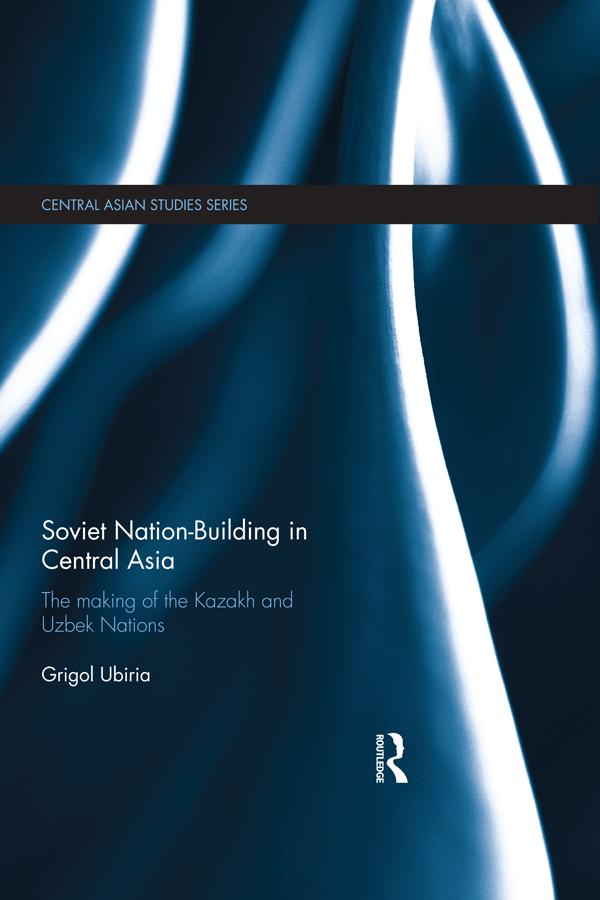
The demise of the Soviet Union in 1991 resulted in new state-led nation-building projects in Central Asia. The emergence of independent republics spawned a renewed Western scholarly interest in the region’s nationality issues. Presenting a detailed study, this book examines the state-led nation-building projects in the Soviet republics of Kazakhstan and Uzbekistan.
Exploring the degree, forms and ways of the Soviet state involvement in creating Kazakh and Uzbek nations, this book places the discussion within the theoretical literature on nationalism. The author argues that both Kazakh and Uzbek nations are artificial constructs of Moscow-based Soviet policy-makers of the 1920s and 1930s. This book challenges existing arguments in current scholarship by bringing some new and alternative insights into the role of indigenous Central Asian and Soviet officials in these nation-building projects. It goes on to critically examine post-Soviet official Kazakh and Uzbek historiographies, according to which Kazakh and Uzbek peoples had developed national collective identities and loyalties long before the Soviet era.
This book will be a useful contribution to Central Asian History and Politics, as well as studies of Nationalism and Soviet Politics.
Pay easily by card, Klarna, Apple Pay or Google Pay. Not happy? You always have a 14-day money-back guarantee. Read more in our terms. If you have any questions, email us at hello@memmo.org.
Memmo makes studying easier – wherever you are in the world. We bring your course books and smart study tools together in one place: summaries, quizzes, podcasts and flashcards. Plus Ted, your study buddy who answers anything you wonder. Over 50,000 students already study here – built to help you learn faster and stress less.