
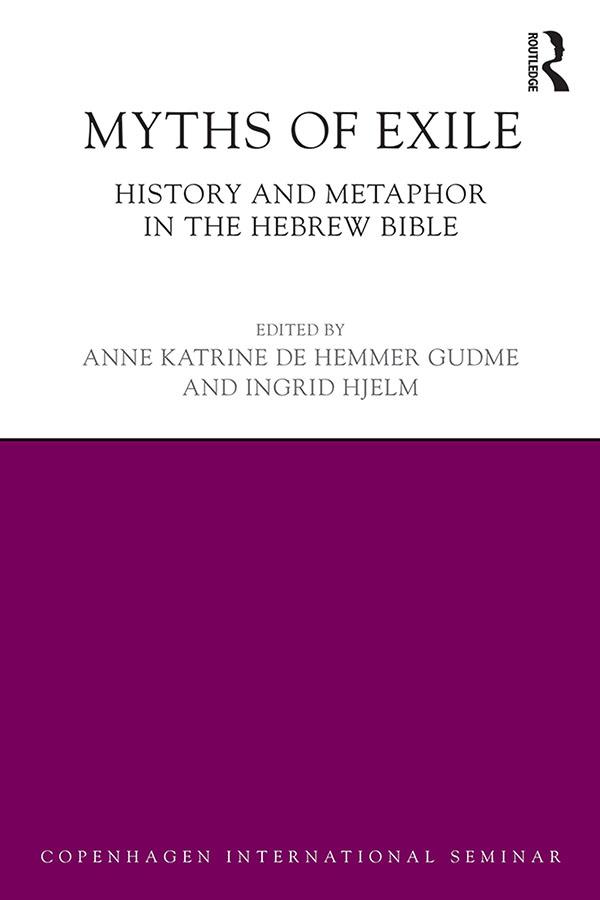
The Babylonian exile in 587-539 BCE is frequently presented as the main explanatory factor for the religious and literary developments found in the Hebrew Bible. The sheer number of both ‘historical’ and narrative exiles confirms that the theme of exile is of great importance in the Hebrew Bible. However, one does not do justice to the topic by restricting it to the exile in Babylon after 587 BCE. In recent years, it has become clear that there are several discrepancies between biblical and extra-biblical sources on invasion and deportation in Palestine in the 1st millennium BCE. Such discrepancy confirms that the theme of exile in the Hebrew Bible should not be viewed as an echo of a single traumatic historical event, but rather as a literary motif that is repeatedly reworked by biblical authors.
Myths of Exile challenges the traditional understanding of 'the Exile' as a monolithic historical reality and instead provides a critical and comparative assessment of motifs of estrangement and belonging in the Hebrew Bible and related literature. Using selected texts as case studies, this book demonstrates how tales of exile and return can be described as a common formative narrative in the literature of the ancient Near East, a narrative that has been interpreted and used in various ways depending on the needs and cultural contexts of the interpreting community. Myths of Exile is a critical study which forms the basis for a fresh understanding of these exile myths as identity-building literary phenomena.
Pay easily by card, Klarna, Apple Pay or Google Pay. Not happy? You always have a 14-day money-back guarantee. Read more in our terms. If you have any questions, email us at hello@memmo.org.
Memmo makes studying easier – wherever you are in the world. We bring your course books and smart study tools together in one place: summaries, quizzes, podcasts and flashcards. Plus Ted, your study buddy who answers anything you wonder. Over 50,000 students already study here – built to help you learn faster and stress less.