
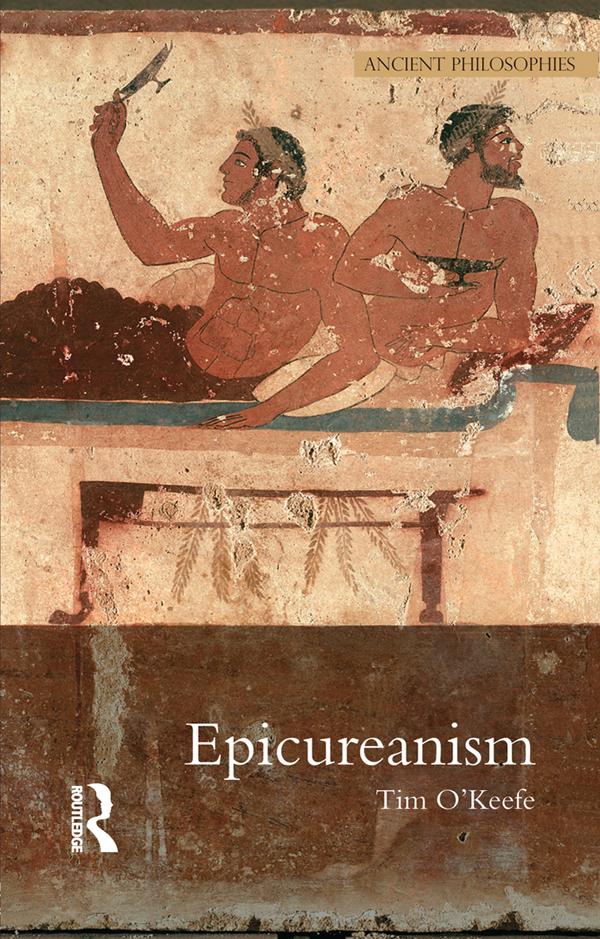
The Epicurean school of philosophy was one of the dominant philosophies of the Hellenistic period. Founded by Epicurus of Samos (century 341-270 BCE) it was characterized by an empiricist epistemology and a hedonistic ethics. This new introduction to Epicurus offers readers clear exposition of the central tenets of Epicurus' philosophy, with particular stress placed on those features that have enduring philosophical interest and where parallels can be drawn with debates in contemporary analytic philosophy. Part 1 of the book examines the fundamentals of Epicurus' metaphysics, including atoms and the void, emergent and sensible properties, cosmology, mechanistic biology, the nature and functioning of the mind, death, and freedom of action. Part 2 explores Epicurus' epistemology, including his arguments against scepticism and his ideas on sensations, preconceptions and feelings. The final part deals with Epicurus' ethics, exploring his arguments for hedonism, his distinctive conceptions of types of pleasure and desire, his belief in virtue, his notions of justice, friendship and his theology. O'Keefe provides extended exegesis of the arguments supporting Epicurus' positions, indicating their strengths and weaknesses, while showing the connections between the various parts of his philosophy and how Epicureanism hangs together as a whole.
Pay easily by card, Klarna, Apple Pay or Google Pay. Not happy? You always have a 14-day money-back guarantee. Read more in our terms. If you have any questions, email us at hello@memmo.org.
Memmo makes studying easier – wherever you are in the world. We bring your course books and smart study tools together in one place: summaries, quizzes, podcasts and flashcards. Plus Ted, your study buddy who answers anything you wonder. Over 50,000 students already study here – built to help you learn faster and stress less.
You might also like
Buy the book0