
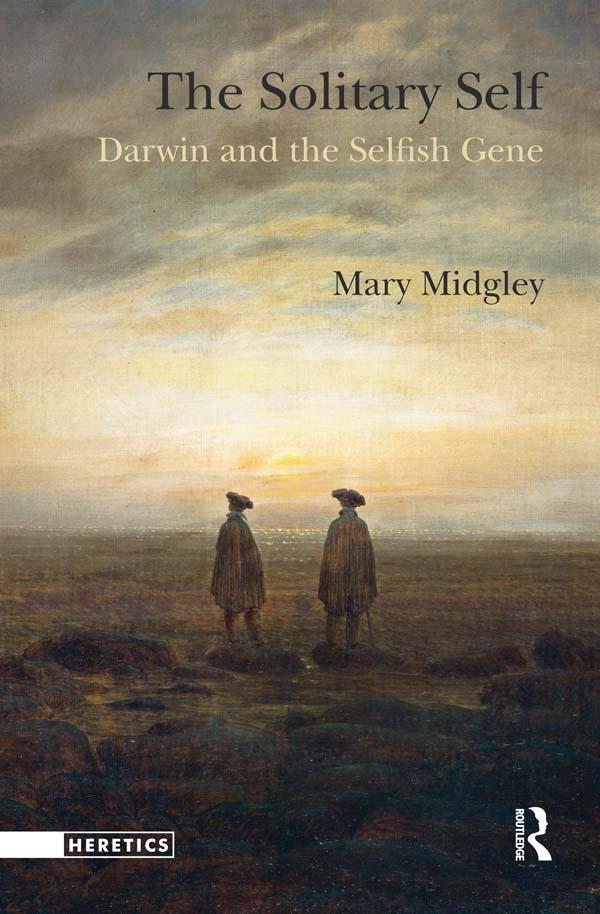
Renowned philosopher Mary Midgley explores the nature of our moral constitution to challenge the view that reduces human motivation to self-interest. Midgley argues cogently and convincingly that simple, one-sided accounts of human motives, such as the 'selfish gene' tendency in recent neo-Darwinian thought, may be illuminating but are always unrealistic. Such neatness, she shows, cannot be imposed on human psychology. She returns to Darwin's original writings to show how the reductive individualism which is now presented as Darwinism does not derive from Darwin but from a wider, Hobbesian tradition in Enlightenment thinking. She reveals the selfish gene hypothesis as a cultural accretion that is just not seen in nature. Heroic independence is not a realistic aim for Homo sapiens. We are, as Darwin saw, earthly organisms, framed to interact constantly with one another and with the complex ecosystems of which we are a tiny part. For us, bonds are not just restraints but also lifelines.
Pay easily by card, Klarna, Apple Pay or Google Pay. Not happy? You always have a 14-day money-back guarantee. Read more in our terms. If you have any questions, email us at hello@memmo.org.
Memmo makes studying easier – wherever you are in the world. We bring your course books and smart study tools together in one place: summaries, quizzes, podcasts and flashcards. Plus Ted, your study buddy who answers anything you wonder. Over 50,000 students already study here – built to help you learn faster and stress less.
You might also like
Buy the book0