
- Is it ethical to pass yourself off as black if you are Caucasian, as Rachel Dolezai, the president of a local chapter of the NAACP, did in 2015?
- Was it ethical for Donald Sterling, the former owner of the NBA team, to use racially inflammatory language?
- Is it ethical to exaggerate or fabricate the importance of one’s role, as Brian Williams apparently did when he anchored the NBC nightly news?
- Is it ethical for a journalist to pay a source for a story, tips, and photos, as TMZ, Gawker and others do regularly?
The above questions as well as other questions definitely illustrate the need for studying ethics.
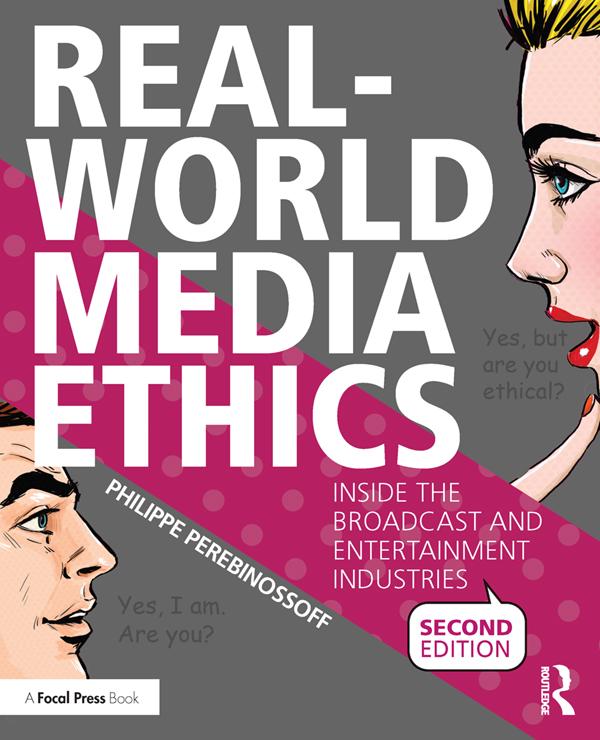
Real-World Media Ethics provides a wide showcase of real ethical issues faced by professionals in the media field. Numerous case studies allow readers to explore multiple perspectives while using realistic ethical principles. This book includes the basics in ethical journalism, as well as the tools to navigate through the landscape of mass media such as public relations, entertainment and other forms of visual communication. The second edition has been updated to encompass globalization, new media platforms, current copyright issues, net neutrality, sports ethics, and more. An accompanying companion website provides additional interviews demonstrating ethical principles in practice. Being a former ABC executive, author Philippe Perebinossoff gives readers an inside look at circumstances with an ethical, experienced eye.
Pay easily by card, Klarna, Apple Pay or Google Pay. Not happy? You always have a 14-day money-back guarantee. Read more in our terms. If you have any questions, email us at hello@memmo.org.
Memmo makes studying easier – wherever you are in the world. We bring your course books and smart study tools together in one place: summaries, quizzes, podcasts and flashcards. Plus Ted, your study buddy who answers anything you wonder. Over 75,000 students already study here – built to help you learn faster and stress less.