
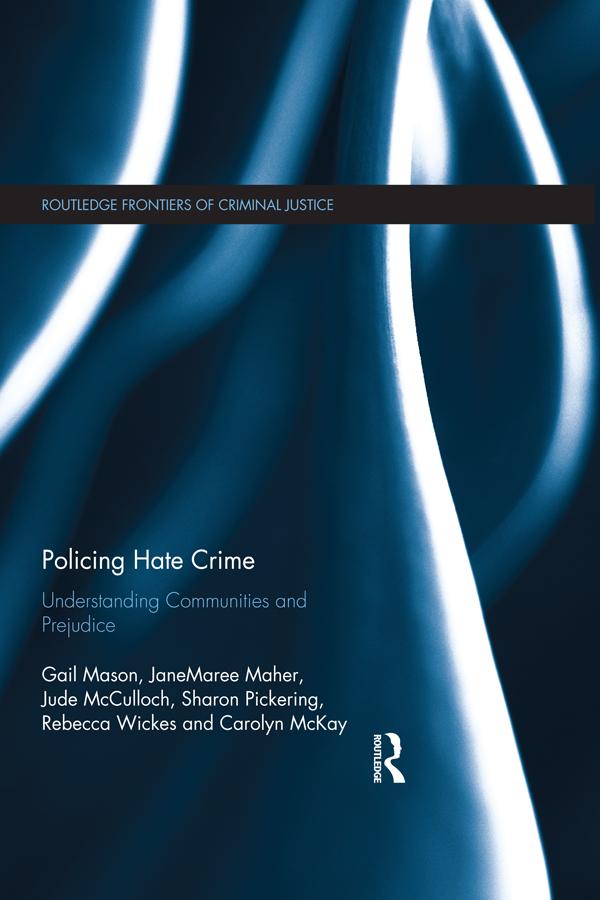
In a contemporary setting of increasing social division and marginalisation, Policing Hate Crime interrogates the complexities of prejudice motivated crime and effective policing practices. Hate crime has become a barometer for contemporary police relations with vulnerable and marginalised communities. But how do police effectively lead conversations with such communities about problems arising from prejudice?
Contemporary police are expected to be active agents in the pursuit of social justice and human rights by stamping out prejudice and group-based animosity. At the same time, police have been criticised in over-policing targeted communities as potential perpetrators, as well as under-policing these same communities as victims of crime. Despite this history, the demand for impartial law enforcement requires police to change their engagement with targeted communities and kindle trust as priorities in strengthening their response to hate crime.
Drawing upon a research partnership between police and academics, this book entwines current law enforcement responses with key debates on the meaning of hate crime to explore the potential for misunderstandings of hate crime between police and communities, and illuminates ways to overcome communication difficulties. This book will be important reading for students taking courses in hate crime, as well as victimology, policing, and crime and community.
Pay easily by card, Klarna, Apple Pay or Google Pay. Not happy? You always have a 14-day money-back guarantee. Read more in our terms. If you have any questions, email us at hello@memmo.org.
Memmo makes studying easier – wherever you are in the world. We bring your course books and smart study tools together in one place: summaries, quizzes, podcasts and flashcards. Plus Ted, your study buddy who answers anything you wonder. Over 50,000 students already study here – built to help you learn faster and stress less.