
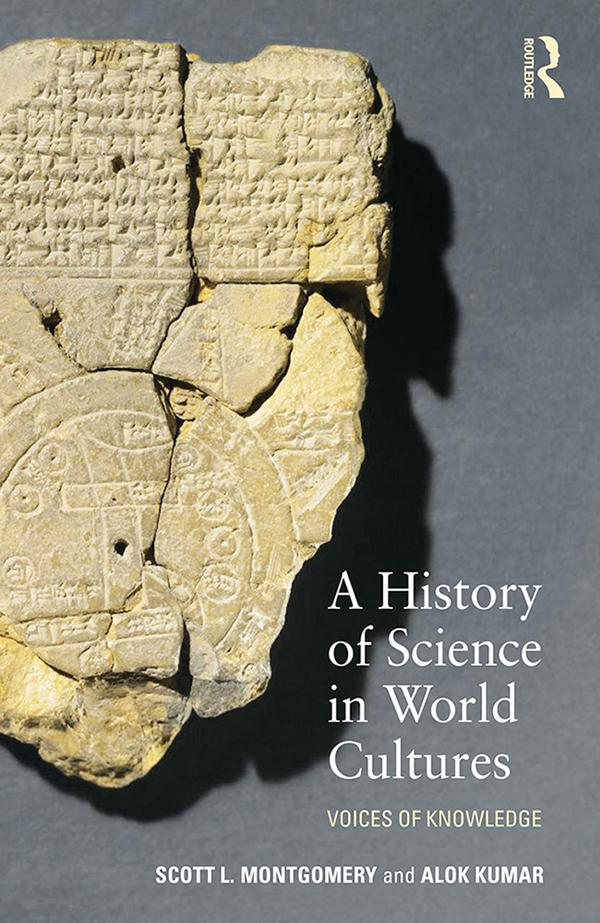
To understand modern science, it is essential to recognize that many of the most fundamental scientific principles are drawn from the knowledge of ancient civilizations. Taking a global yet comprehensive approach to this complex topic, A History of Science in World Cultures uses a broad range of case studies and examples to demonstrate that the scientific thought and method of the present day is deeply rooted in a pluricultural past.
Covering ancient Egypt, Mesopotamia, India, Greece, China, Islam, and the New World, this volume discusses the scope of scientific and technological achievements in each civilization and how the knowledge it developed came to impact the European Renaissance. Themes covered include the influence these scientific cultures had upon one another, the power of writing and its technologies, visions of mathematical order in the universe and how it can be represented, and what elements of the distant scientific past we continue to depend upon today. Topics often left unexamined in histories of science are treated in fascinating detail, such as the chemistry of mummification and the Great Library in Alexandria in Egypt, jewellery and urban planning of the Indus Valley, hydraulic engineering and the compass in China, the sustainable agriculture and dental surgery of the Mayas, and algebra and optics in Islam.
This book shows that scientific thought has never been confined to any one era, culture, or geographic region. Clearly presented and highly illustrated, A History of Science in World Cultures is the perfect text for all students and others interested in the development of science throughout history.
Pay easily by card, Klarna, Apple Pay or Google Pay. Not happy? You always have a 14-day money-back guarantee. Read more in our terms. If you have any questions, email us at hello@memmo.org.
Memmo makes studying easier – wherever you are in the world. We bring your course books and smart study tools together in one place: summaries, quizzes, podcasts and flashcards. Plus Ted, your study buddy who answers anything you wonder. Over 50,000 students already study here – built to help you learn faster and stress less.