
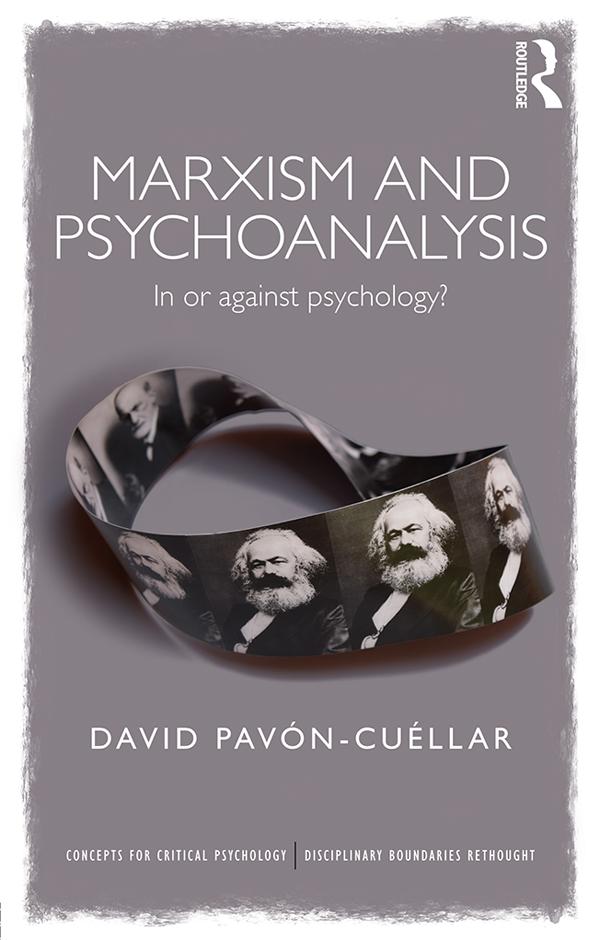
The methods developed by Freud and Marx have enabled a range of scholars to critically reflect upon the ideological underpinnings of modern and now postmodern or hypermodern western societies. In this intriguing book, the discipline of psychology itself is screened through the twin dynamics of Marxism and psychoanalysis. David Pavón-Cuéllar asks to what extent the terms, concerns and goals of psychology reflect, in fact, the dominant bourgeois ideology that has allowed it to flourish.
The book charts a gradual psychologization within society and culture dating from the nineteenth century, and examines how the tacit ideals within mainstream psychology – creating good citizens or productive workers – sit uneasily against Marx and Freud’s ambitions of revealing fault-lines and contradictions within individualist and consumer-oriented structures.
The positivist aspiration of psychology to become a natural science has been the source of extensive debate, critical voices asserting the social and cultural contexts through which the human mind and behaviour should be understood. This challenging new book provides another voice that, in addressing two of the most influential intellectual traditions of the past 150 years, widens the debate still further to examine the foundations of psychology.
Pay easily by card, Klarna, Apple Pay or Google Pay. Not happy? You always have a 14-day money-back guarantee. Read more in our terms. If you have any questions, email us at hello@memmo.org.
Memmo makes studying easier – wherever you are in the world. We bring your course books and smart study tools together in one place: summaries, quizzes, podcasts and flashcards. Plus Ted, your study buddy who answers anything you wonder. Over 50,000 students already study here – built to help you learn faster and stress less.