
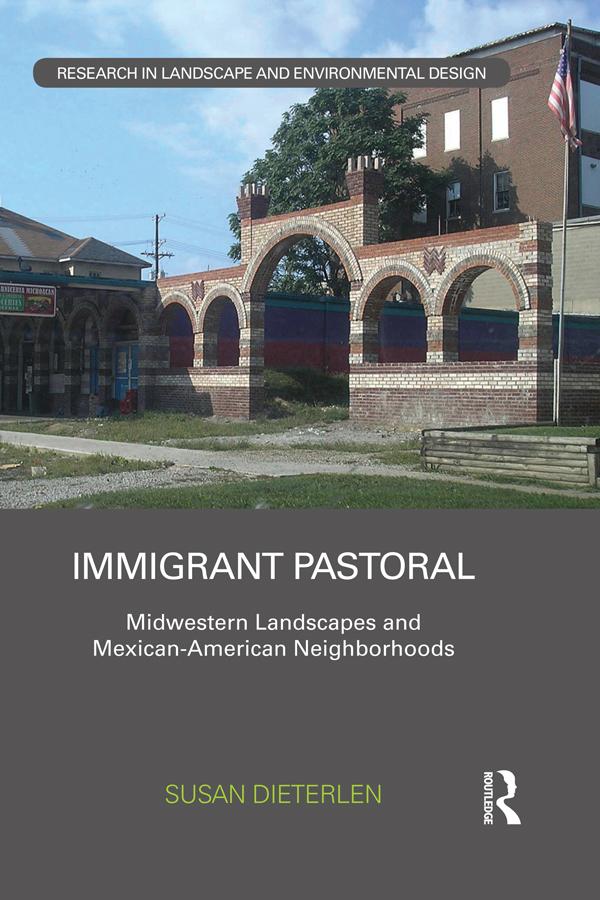
Immigrant Pastoral examines the growth of new Mexican heritage communities in the Midwest through the physical form of their cities and neighborhoods. The landscapes of these New Communities contrast with nearby small cities that are home to longstanding Mexican-American communities, where different landscapes reveal a history of inequality of opportunity. Together these two landscape types illustrate how inequality can persist or abate through comprehensive descriptions of the three main types of Midwestern Mexican-American landscapes: Established Communities, New Communities, and Mixed Communities. Each is described in spatial and non-spatial terms, with a focus on one example city. Specific directives about design and planning work in each landscape type follow these descriptions, presented in case studies of hypothetical landscape architectural projects. Subsequent chapters discuss less common Midwestern Mexican-American landscape types and their opportunities for design and planning, and implications for other immigrant communities in other places.
This story of places shaped by immigrants new and old and the reactions of other residents to their arrival is critical to the future of all cities, towns, and neighborhoods striving to weather the economic transformations and demographic shifts of the twentieth and twenty-first centuries. The challenges facing these cities demand the recognition and appreciation of their multicultural assets, in order to craft a bright and inclusive future.
Pay easily by card, Klarna, Apple Pay or Google Pay. Not happy? You always have a 14-day money-back guarantee. Read more in our terms. If you have any questions, email us at hello@memmo.org.
Memmo makes studying easier – wherever you are in the world. We bring your course books and smart study tools together in one place: summaries, quizzes, podcasts and flashcards. Plus Ted, your study buddy who answers anything you wonder. Over 75,000 students already study here – built to help you learn faster and stress less.