
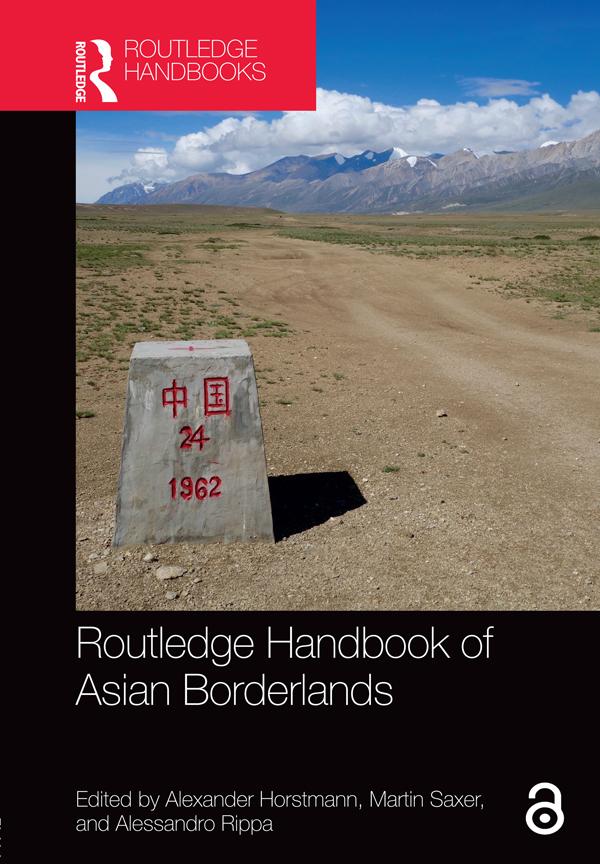
In Asia, where authoritarian-developmental states have proliferated, statehood and social control are heavily contested in borderland spaces. As a result, in the post-Cold War world, borders have not only redefined Asian incomes and mobilities, they have also rekindled neighbouring relations and raised questions about citizenship and security.
The contributors to the Routledge Handbook of Asian Borderlands highlight some of these processes taking place at the fringe of the state. Offering an array of comparative perspectives of Asian borders and borderlands in the global context, this handbook is divided into thematic sections, including:
-
Livelihoods, commodities and mobilities
-
Physical land use and agrarian transformations
- Borders and boundaries of the state and the notion of statelessness
- Re-conceptualizing trade and the economy in the borderlands
- The existence and influence of humanitarians, religions, and NGOs
- The militarization of borderlands
Causing us to rethink and fundamentally question some of the categories of state, nation, and the economy, this is an important resource for students and scholars of Asian Studies, Border Studies, Social and Cultural Studies, and Anthropology.
Chapter 12 of this book is freely available as a downloadable Open Access PDF at http://www.taylorfrancis.com under a Creative Commons Attribution-Non Commercial-No Derivatives (CC-BY-NC-ND) 4.0 license.
Pay easily by card, Klarna, Apple Pay or Google Pay. Not happy? You always have a 14-day money-back guarantee. Read more in our terms. If you have any questions, email us at hello@memmo.org.
Memmo makes studying easier – wherever you are in the world. We bring your course books and smart study tools together in one place: summaries, quizzes, podcasts and flashcards. Plus Ted, your study buddy who answers anything you wonder. Over 50,000 students already study here – built to help you learn faster and stress less.