
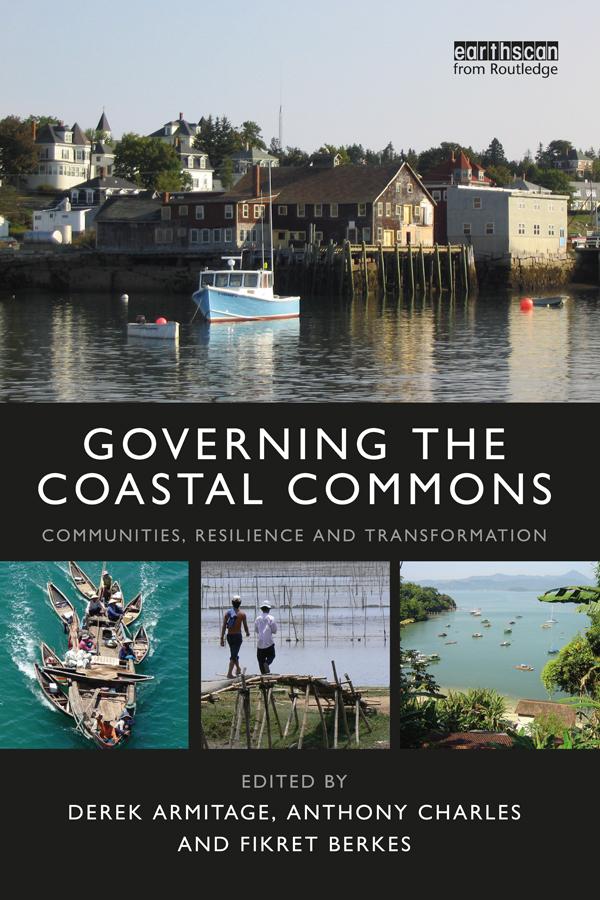
Coastal communities depend on the marine environment for their livelihoods, but the common property nature of marine resources poses major challenges for the governance of such resources. Through detailed cases and consideration of broader global trends, this volume examines how coastal communities are adapting to environmental change, and the attributes of governance that foster deliberate transformations and help to build resilience of social and ecological systems.
Governance here reflects how communities, societies and organisations (e.g. fisher cooperatives, government agencies) choose to organise themselves to make decisions about important issues, such as the use and protection of coastal commons (e.g. fishery resources). The book shows how a governance approach generates insights into the specific forms and arrangements that enable coastal communities to steer away from unsustainable pathways. It also provides an analytical lens to consider important questions of power, knowledge and legitimacy in linked social-ecological systems. Chapters highlight examples in which communities are engaging in deliberative transformations to build resilience and enhance their well-being. These transformations and efforts to build resilience are emerging through multi-level collaboration, shared learning, innovative policies and institutional arrangements (such as new property rights regimes and co-management), methodologies that engage with indigenous cultural practices, and entrepreneurial activities, including income and livelihood diversification.
Case studies are included from a range of countries including Canada, Japan, Brazil, Indonesia, Mexico, South Africa, Thailand, the South Pacific and Europe. The authors integrate theory with practical examples to improve coastal marine policy and governance, and draw upon emerging concepts from social-ecological resilience and transformations, adaptive governance and the scholarship on the commons.
Pay easily by card, Klarna, Apple Pay or Google Pay. Not happy? You always have a 14-day money-back guarantee. Read more in our terms. If you have any questions, email us at hello@memmo.org.
Memmo makes studying easier – wherever you are in the world. We bring your course books and smart study tools together in one place: summaries, quizzes, podcasts and flashcards. Plus Ted, your study buddy who answers anything you wonder. Over 50,000 students already study here – built to help you learn faster and stress less.