
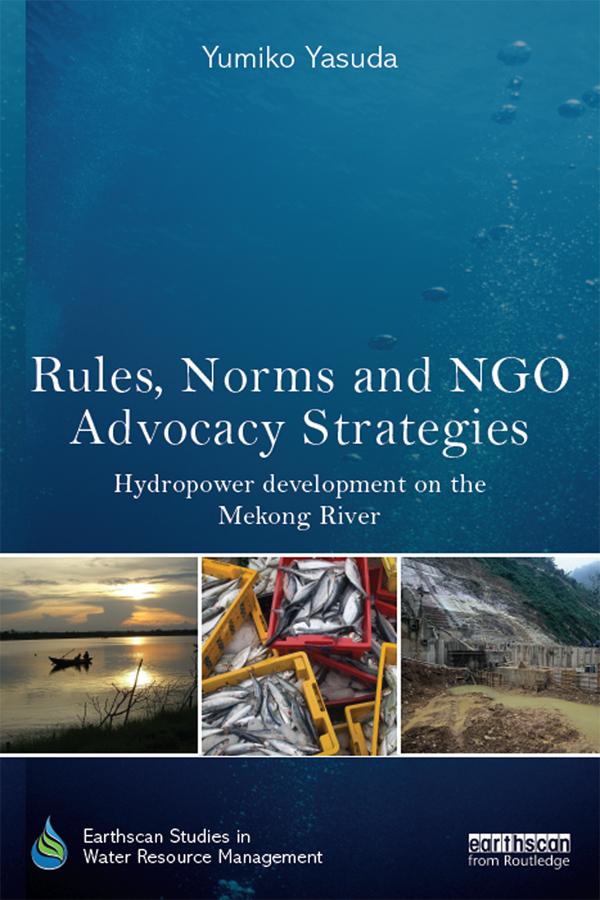
There is much controversy over the development of new dams for hydropower, where concerns for environmental protection and the livelihoods of local people may conflict with the goals of economic development. This book analyses the opportunities and barriers that NGOs and civil society actors face when conducting advocacy campaigns against such developments.
Through a comparison of two NGO coalitions in Cambodia and Vietnam advocating against the Xayaburi hydropower dam on the Mekong River, the book explores the intricate interactions of formal and informal rules and norms and how they influence advocacy strategies. A framework for analysis is proposed which serves as a tool for analysis by civil society actors. The author generates fresh insights into the way in which opportunities and barriers are created for NGOs to influence state-centric decision-making processes.
The book also discusses Mekong riparian states’ negotiation process over the Xayaburi hydropower dam in detail, providing an analysis of the Mekong River’s governance under the 1995 Mekong Agreement. The book concludes by suggesting ways to improve the engagement of civil society actors in the governance of transboundary rivers and development projects.
Pay easily by card, Klarna, Apple Pay or Google Pay. Not happy? You always have a 14-day money-back guarantee. Read more in our terms. If you have any questions, email us at hello@memmo.org.
Memmo makes studying easier – wherever you are in the world. We bring your course books and smart study tools together in one place: summaries, quizzes, podcasts and flashcards. Plus Ted, your study buddy who answers anything you wonder. Over 50,000 students already study here – built to help you learn faster and stress less.