
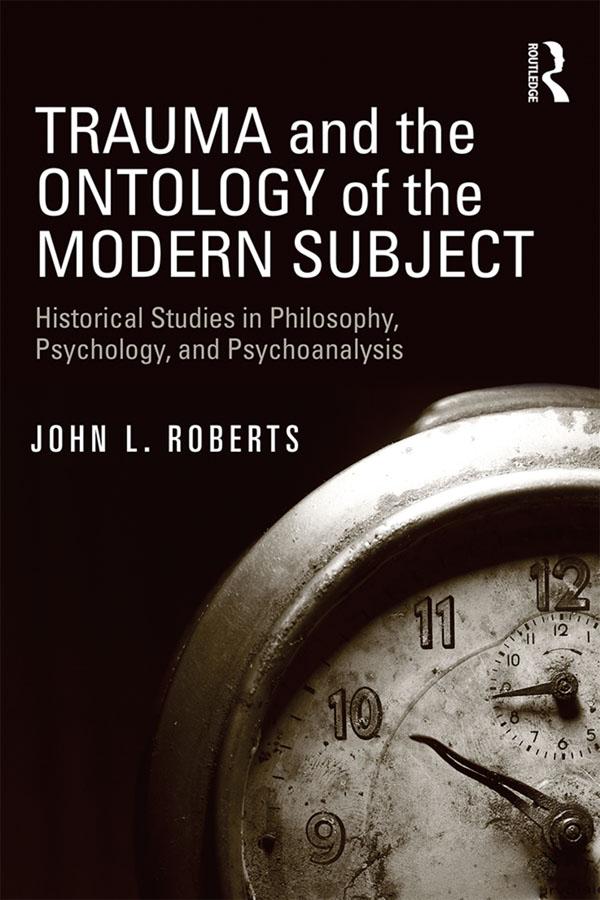
Recent scholarship has inquired into the socio-historical, discursive genesis of trauma. Trauma and the Ontology of the Modern Subject, however, seeks what has not been actualized in trauma studies – that is, how the necessity and unassailable intensity of trauma is fastened to its historical emergence. We must ask not only what trauma means for the individual person’s biography, but also what it means to be the historical subject of trauma. In other words, how does being human in this current period of history implicate one’s lived possibilities that are threatened, and perhaps framed, through trauma? Foucauldian sensibilities inform a critical and structural analysis that is hermeneutically grounded.
Drawing on the history of ideas and on Lacan’s work in particular, John L. Roberts argues that what we mean by trauma has developed over time, and that it is intimately tied with an ontology of the subject; that is to say, what it is to be, and means to be human. He argues that modern subjectivity – as articulated by Heidegger, Levinas, and Lacan – is structurally traumatic, founded in its finitude as self-withdrawal in time, its temporal self-absence becoming the very conditions for agency, truth and knowledge. The book also argues that this fractured temporal horizon – as an effect of an interrupting Otherness or alterity – is obscured through the discourses and technologies of the psy-disciplines (psychiatry, psychology, and psychotherapy). Consideration is given to social, political, and economic consequences of this concealment.
Trauma and the Ontology of the Modern Subject will be of enduring interest to psychoanalysts and psychotherapists as well as scholars of philosophy and cultural studies.
Pay easily by card, Klarna, Apple Pay or Google Pay. Not happy? You always have a 14-day money-back guarantee. Read more in our terms. If you have any questions, email us at hello@memmo.org.
Memmo makes studying easier – wherever you are in the world. We bring your course books and smart study tools together in one place: summaries, quizzes, podcasts and flashcards. Plus Ted, your study buddy who answers anything you wonder. Over 50,000 students already study here – built to help you learn faster and stress less.