
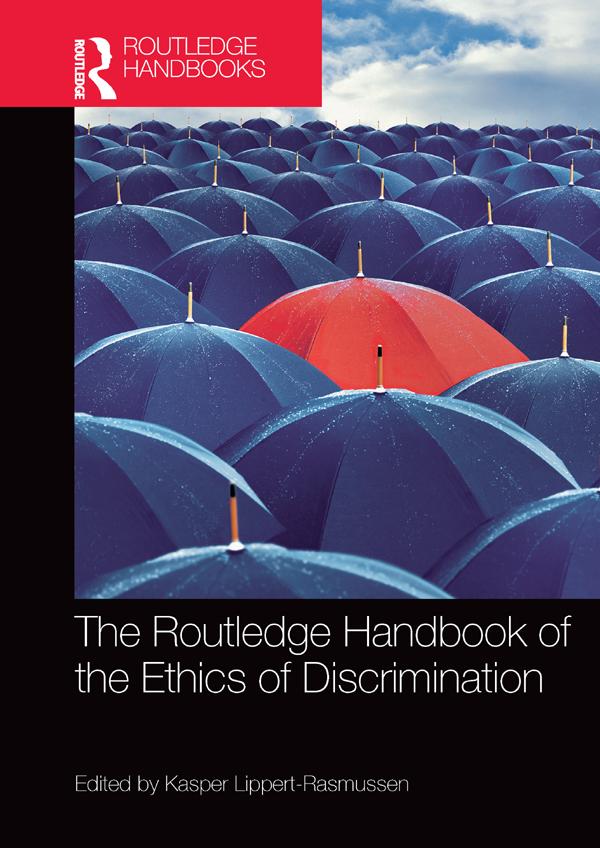
While it has many connections to other topics in normative and applied ethics, discrimination is a central subject in philosophy in its own right. It plays a significant role in relation to many real-life complaints about unjust treatment or unjust inequalities, and it raises a number of questions in political and moral philosophy, and in legal theory. Some of these questions include: what distinguishes the concept of discrimination from the concept of differential treatment? What distinguishes direct from indirect discrimination? Is discrimination always morally wrong? What makes discrimination wrong? How should we eliminate the effects of discrimination? By covering a wide range of topics, and by doing so in a way that does not assume prior acquaintance, this handbook enables the reader to get to grips with the omnipresent issue.
The Routledge Handbook of the Ethics of Discrimination is an outstanding reference source to this exciting subject and the first collection of its kind. Comprising over thirty chapters by a team of international contributors the handbook is divided into six main parts:
• conceptual issues
• the wrongness of discrimination
• groups of ‘discriminatees’
• sites of discrimination
• causes and means
• history of discrimination.
Essential reading for students and researchers in applied ethics and political philosophy the handbook will also be very useful for those in related fields, such as law, sociology and politics.
Pay easily by card, Klarna, Apple Pay or Google Pay. Not happy? You always have a 14-day money-back guarantee. Read more in our terms. If you have any questions, email us at hello@memmo.org.
Memmo makes studying easier – wherever you are in the world. We bring your course books and smart study tools together in one place: summaries, quizzes, podcasts and flashcards. Plus Ted, your study buddy who answers anything you wonder. Over 50,000 students already study here – built to help you learn faster and stress less.