
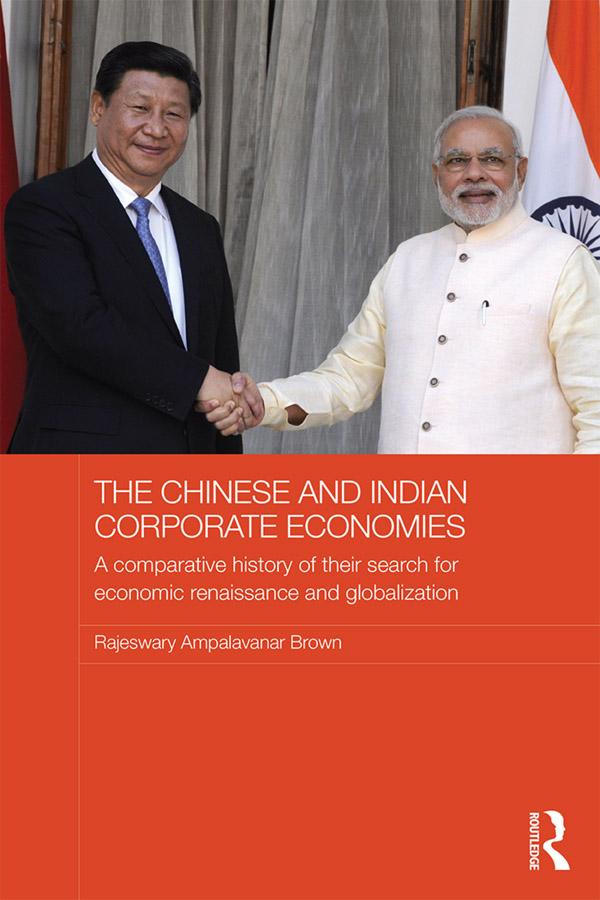
This is a compelling analysis of the corporate economies of China and India, which are having a huge impact not just on the international economy, but also in the geopolitical and international strategy sphere as a result of an accelerated globalisation by these two countries, which is unleashing powerful economic challenges to corporate structures, economic institutions and law worldwide. The big question is how after centuries of underdevelopment China and now India are emerging powerfully and pulling ahead of Western European economies. Analysing the role of the state and the adroit use of law, and their impact on the corporate evolution of both China and India, provides greater clarity and insight into why China has evolved as a manufacturing nation utilizing cheap abundant labour while India has not exploited such advantages but instead focused on IT and higher value industries, even abroad as Tata has demonstrated in the motor industry in Europe. Again while Chinese corporations have expanded abroad as an arm of the state into Asia, Middle East, Africa, Europe, Latin America and parts of the southern states of the USA, India has pushed principally into Europe through the efforts of powerful minority capitalists of Parsi and Gujerati background, overcoming technological gaps and differences through acquisitions and absorptions of existing corporations in particular industries, especially in steel, automobiles and textiles. In China, state owned corporations have been dominant. In India, though state owned enterprises have been powerful since 1951, it has been private capitalists with an established stronghold since the colonial period and even under the Socialist period from 1951-1991 who have been the more productive main actors both in India and abroad.
Pay easily by card, Klarna, Apple Pay or Google Pay. Not happy? You always have a 14-day money-back guarantee. Read more in our terms. If you have any questions, email us at hello@memmo.org.
Memmo makes studying easier – wherever you are in the world. We bring your course books and smart study tools together in one place: summaries, quizzes, podcasts and flashcards. Plus Ted, your study buddy who answers anything you wonder. Over 50,000 students already study here – built to help you learn faster and stress less.