
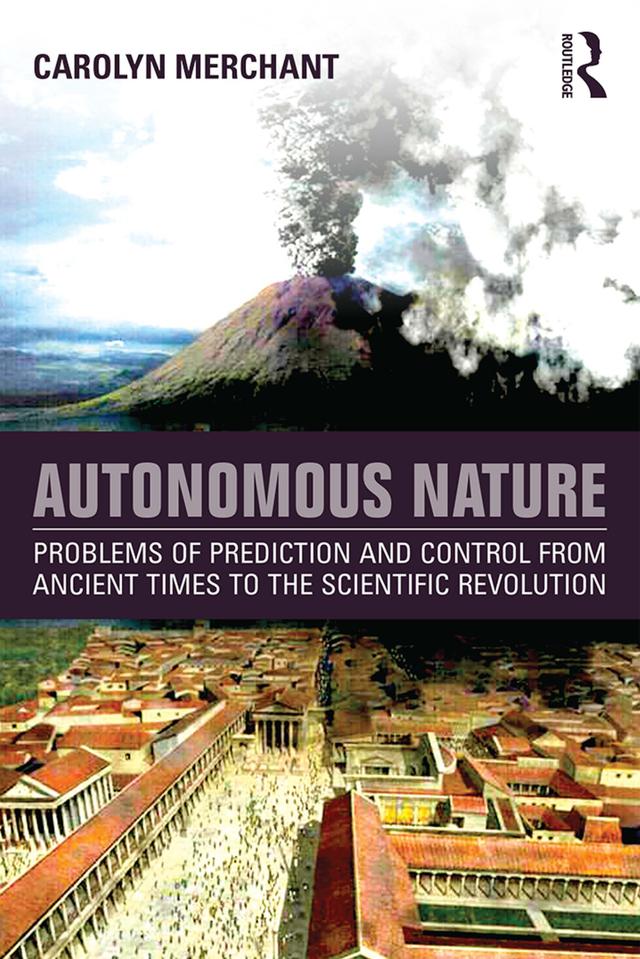
Autonomous Nature investigates the history of nature as an active, often unruly force in tension with nature as a rational, logical order from ancient times to the Scientific Revolution of the seventeenth century. Along with subsequent advances in mechanics, hydrodynamics, thermodynamics, and electromagnetism, nature came to be perceived as an orderly, rational, physical world that could be engineered, controlled, and managed. Autonomous Nature focuses on the history of unpredictability, why it was a problem for the ancient world through the Scientific Revolution, and why it is a problem for today. The work is set in the context of vignettes about unpredictable events such as the eruption of Mt. Vesuvius, the Bubonic Plague, the Lisbon Earthquake, and efforts to understand and predict the weather and natural disasters. This book is an ideal text for courses on the environment, environmental history, history of science, or the philosophy of science.
Pay easily by card, Klarna, Apple Pay or Google Pay. Not happy? You always have a 14-day money-back guarantee. Read more in our terms. If you have any questions, email us at hello@memmo.org.
Memmo makes studying easier – wherever you are in the world. We bring your course books and smart study tools together in one place: summaries, quizzes, podcasts and flashcards. Plus Ted, your study buddy who answers anything you wonder. Over 50,000 students already study here – built to help you learn faster and stress less.