
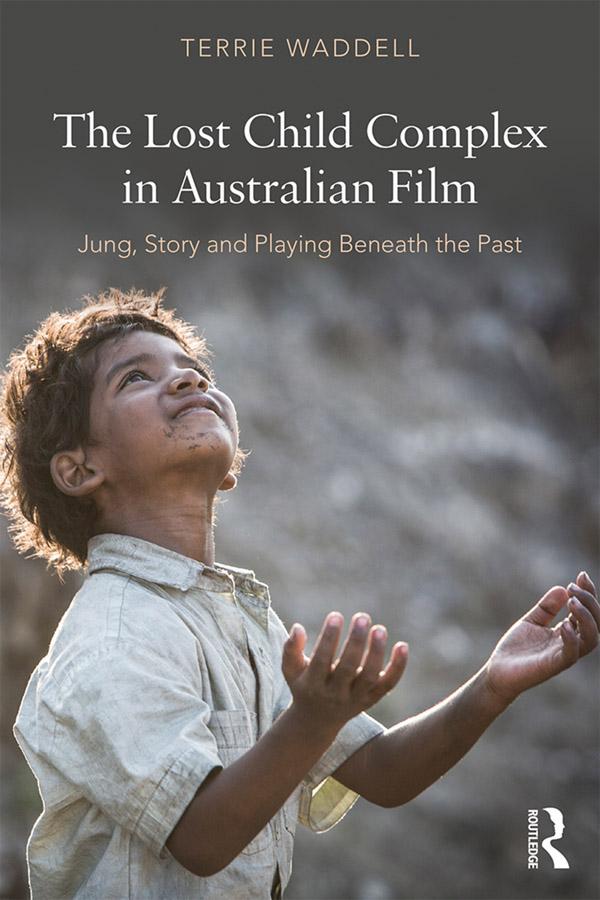
The mythologising of lost and abandoned children significantly influences Australian storytelling. In The Lost Child Complex in Australian Film, Terrie Waddell looks at the concept of the ‘lost child’ from a psychological and cultural perspective. Taking an interdisciplinary Jungian approach, she re-evaluates this cyclic storytelling motif in history, literature, and the creative arts, as the nucleus of a cultural complex – a group obsession that as Jung argued of all complexes, has us.
Waddell explores ‘the lost child’ in its many manifestations, as an element of the individual and collective psyche, historically related to the trauma of colonisation and war, and as key theme in Australian cinema from the industry’s formative years to the present day. The films discussed in textual depth transcend literal lost in the bush mythologies, or actual cases of displaced children, to focus on vulnerable children rendered lost through government and institutional practices, and adult/parental characters developmentally arrested by comforting or traumatic childhood memories. The victory/winning fixation governing the USA – diametrically opposed to the lost child motif – is also discussed as a comparative example of the mesmerising nature of the cultural complex. Examining iconic characters and events, such as the Gallipoli Campaign and Trump’s presidency, and films such as The Babadook, Lion, and Predestination, this book scrutinises the way in which a culture talks to itself, about itself. This analysis looks beyond the melancholy traditionally ascribed to the lost child, by arguing that the repetitive and prolific imagery that this theme stimulates, can be positive and inspiring.
The Lost Child Complex in Australian Film is a unique and compelling work which will be highly relevant for academics and students of Jungian and post-Jungian ideas, cultural studies, screen and media studies. It will also appeal to Jungian psychotherapists and analytical psychologists as well as readers with a broader interest in Australian history and politics.
Pay easily by card, Klarna, Apple Pay or Google Pay. Not happy? You always have a 14-day money-back guarantee. Read more in our terms. If you have any questions, email us at hello@memmo.org.
Memmo makes studying easier – wherever you are in the world. We bring your course books and smart study tools together in one place: summaries, quizzes, podcasts and flashcards. Plus Ted, your study buddy who answers anything you wonder. Over 50,000 students already study here – built to help you learn faster and stress less.