
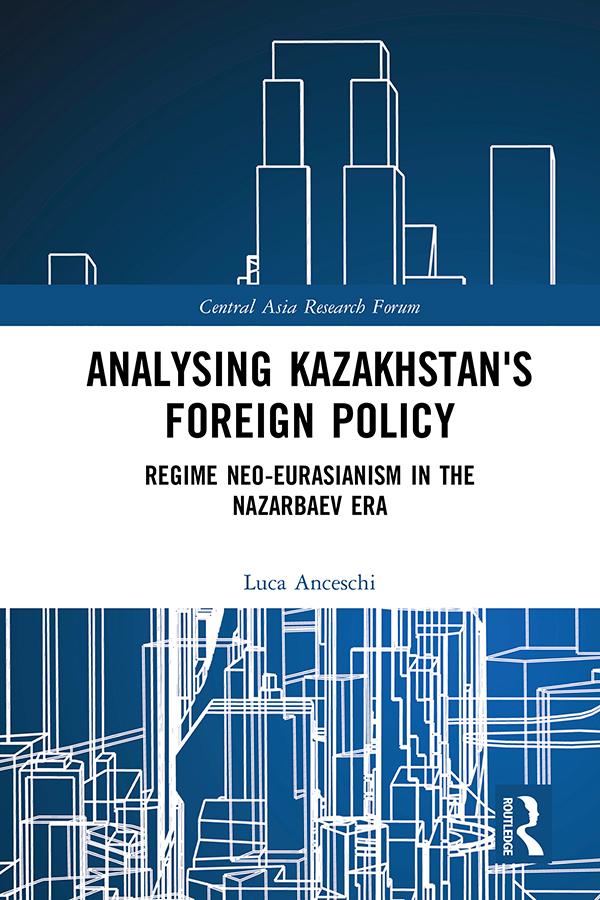
This book investigates the roles that ideas and constructs associated with Eurasia have played in the making of Kazakhstan’s foreign policy during the Nazarbaev era.
This book delves into the specific Eurasia-centric narratives through which the regime, headed by Nursultan Nazarbaev, imagined the role of post-Soviet Kazakhstan in the wider Eurasian geopolitical space. Based on substantive fieldwork and sustained engagement with primary sources, the book unveils the power implications of Kazakhstani neo-Eurasianism, arguing that the strengthening of the regime’s domestic power ranked highly in the list of objectives pursued by Kazakhstani foreign policy between the collapse of the Soviet Union and Nazarbaev’s apparent withdrawal from the Kazakhstani political scene (19 March 2019). This book, ultimately, is a study of inter-state integration, which makes use of a rigorous methodological approach to assess different incarnations of post-Soviet multilateralism, from the Commonwealth of Independent States to the more recent, and highly controversial, Eurasian Economic Union.
This book offers a ground-breaking analysis of Kazakhstani foreign policy in the Nazarbaev era. It will be of interest to students and scholars of Central Asian Politics, International Relations and Security Studies.
Pay easily by card, Klarna, Apple Pay or Google Pay. Not happy? You always have a 14-day money-back guarantee. Read more in our terms. If you have any questions, email us at hello@memmo.org.
Memmo makes studying easier – wherever you are in the world. We bring your course books and smart study tools together in one place: summaries, quizzes, podcasts and flashcards. Plus Ted, your study buddy who answers anything you wonder. Over 50,000 students already study here – built to help you learn faster and stress less.