
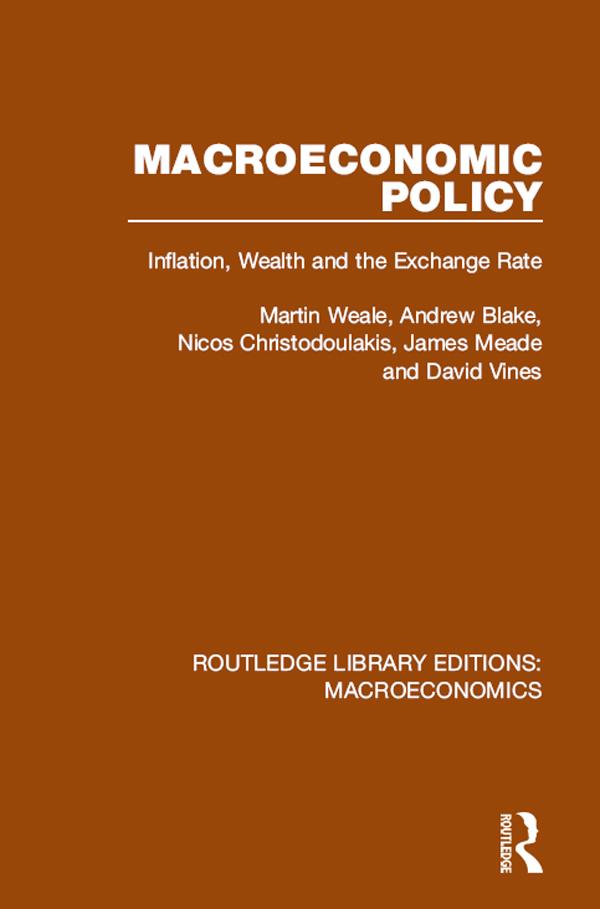
This analysis of macroeconomic policy, originally published in 1989, argues that key government objectives, such as reduced inflation, decreased unemployment and an adequate level of national saving can be achieved only by employing both monetary and fiscal policies, in conjunction with supply-side policies expressly designed to improve the workings of the labour market.
Part 1 is a comparative analysis showing the effects of monetary and fiscal policy on the economy. Real-wage rigidity in the labour market is shown to have important consequences for the working of both types of policy, because it conditions the economy’s response to tax changes. Part 2 presents an econometric model which combines consistent stock-flow accounts with a full range of expectational effects. Part 3 presents an innovative technique for solving rational expectations models with the need for arbitary terminal conditions.
Pay easily by card, Klarna, Apple Pay or Google Pay. Not happy? You always have a 14-day money-back guarantee. Read more in our terms. If you have any questions, email us at hello@memmo.org.
Memmo makes studying easier – wherever you are in the world. We bring your course books and smart study tools together in one place: summaries, quizzes, podcasts and flashcards. Plus Ted, your study buddy who answers anything you wonder. Over 50,000 students already study here – built to help you learn faster and stress less.