
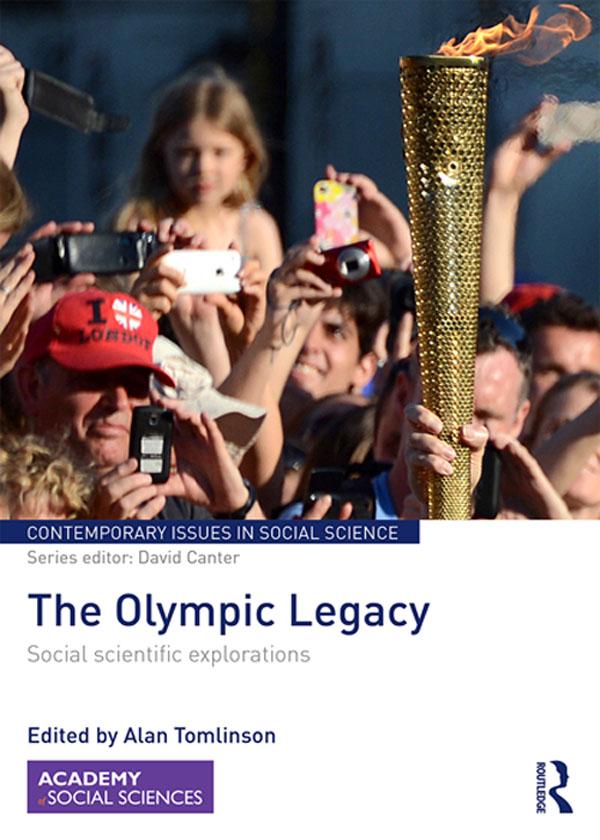
This comprehensive collection provides an overview of social scientific perspectives on Olympic legacy, using specialist analyses and selected cases to illuminate the recurring anthropological, political, and sociological dimensions of the legacy debate. Drawing upon research conducted on the Beijing, Vancouver, Athens, London and Rio de Janeiro Olympic Games, it identifies the recurrent rhetoric that has characterised the legacy debate, alongside the harsh realities that contradict many legacies and aspirations.
Fifteen researchers from six countries contribute a range of critical analytical studies which explore macro-perspectives on the shifting political economy symbolized at Beijing or in an over-reaching Greece, the soft power benefits perceived by the Rio 2016 organizers, the anthropological study of neighbourhood spaces threatened by corporate branding, and the apparatus of surveillance surrounding an Olympic Games. The symbolic importance of the Games is also captured in studies of volunteer motivations, labour and work initiatives, and the introduction of women’s boxing at London 2012. In a comprehensive overview, Alan Tomlinson illuminates the rhetoric of successive Olympic cycles and the rise to prominence of the legacy question in that debate.
This book was originally published as a special issue of Contemporary Social Science.
Pay easily by card, Klarna, Apple Pay or Google Pay. Not happy? You always have a 14-day money-back guarantee. Read more in our terms. If you have any questions, email us at hello@memmo.org.
Memmo makes studying easier – wherever you are in the world. We bring your course books and smart study tools together in one place: summaries, quizzes, podcasts and flashcards. Plus Ted, your study buddy who answers anything you wonder. Over 50,000 students already study here – built to help you learn faster and stress less.