
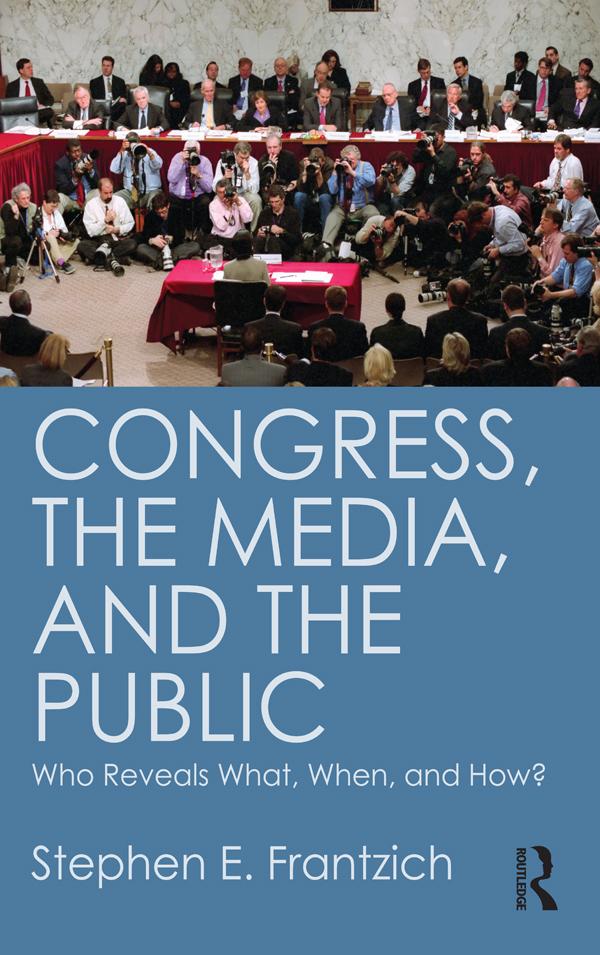
From the beginning of the Republic, members of Congress have been in the media spotlight. In recent years, the expansion of media venues has provided both challenges and opportunities to Representatives and Senators, the public, and even the media itself. Legacy media such as newspapers and broadcast television each carry with them their own needs and accepted usages affecting the kind and volume of news about Congress delivered to the public. These sources still serve important roles for much of the public and are covered here. This book goes beyond the traditional legacy media to include Congress’ portrayal on live television, in political cartoons, in film, as a part of the emerging “infotainment†venues, and through social media such as web pages, Facebook, and Twitter. We increasingly live in a world where the lines between traditional news and others sources of information have been erased.
This is an exciting, if challenging, time, for Congress, the media, and the public as each attempts to sort out the new media environment and employ it to its advantage. Using a comprehensive analysis of previous research, dozens of interviews, and the inclusion of empirical data, this book assesses the current status of the relationship between Congress and the media and sorts out the temporary changes from those likely to represent future trends. Whether one is associated with Congress, is an interested citizen, or is part of the media industry, understanding the relationships and developments between and among them is key to understanding how the public behaves in relation to Congress, and vice versa.
Pay easily by card, Klarna, Apple Pay or Google Pay. Not happy? You always have a 14-day money-back guarantee. Read more in our terms. If you have any questions, email us at hello@memmo.org.
Memmo makes studying easier – wherever you are in the world. We bring your course books and smart study tools together in one place: summaries, quizzes, podcasts and flashcards. Plus Ted, your study buddy who answers anything you wonder. Over 50,000 students already study here – built to help you learn faster and stress less.