
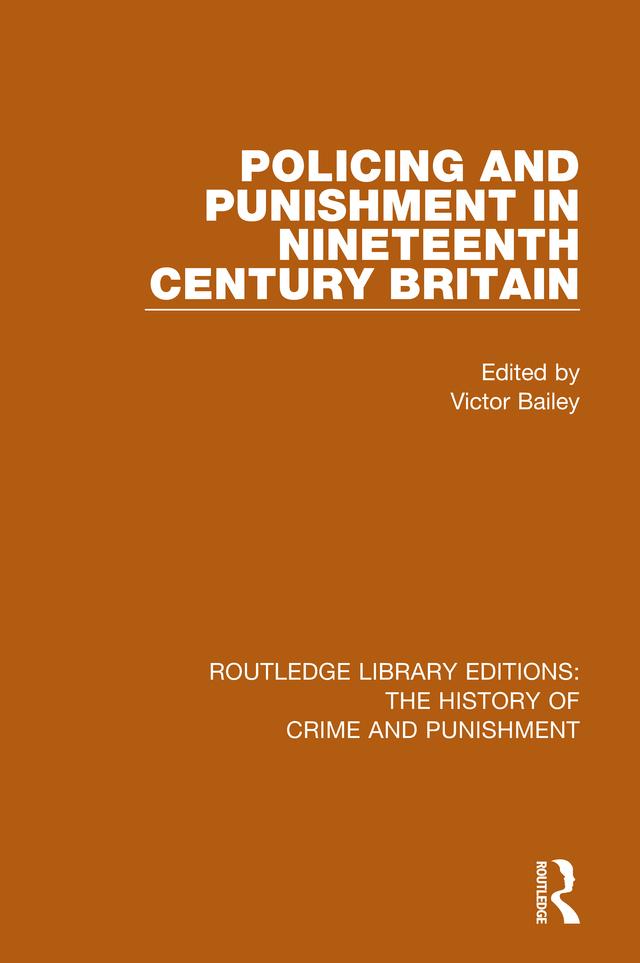
In the years between 1750 and 1868, English criminal justice underwent significant changes. The two most crucial developments were the gradual establishment of an organised, regular police, and the emergence of new secondary punishments, following the restriction in the scope of the death penalty. In place of an ill-paid parish constabulary, functioning largely through a system of rewards and common informers, professional police institutions were given the task of executing a speedy and systematic enforcement of the criminal law. In lieu of the severe and capriciously-administered capital laws, a penalty structure based on a proportionality between the gravity of crimes and the severity of punishments was erected as arguably a more effective deterrent of crime.
This book, first published in 1981, examines the impact of these two important developments and casts new light on the way in which law enforcement evolved during the nineteenth century. This title will be of interest to students of history and criminology.
Pay easily by card, Klarna, Apple Pay or Google Pay. Not happy? You always have a 14-day money-back guarantee. Read more in our terms. If you have any questions, email us at hello@memmo.org.
Memmo makes studying easier – wherever you are in the world. We bring your course books and smart study tools together in one place: summaries, quizzes, podcasts and flashcards. Plus Ted, your study buddy who answers anything you wonder. Over 50,000 students already study here – built to help you learn faster and stress less.