
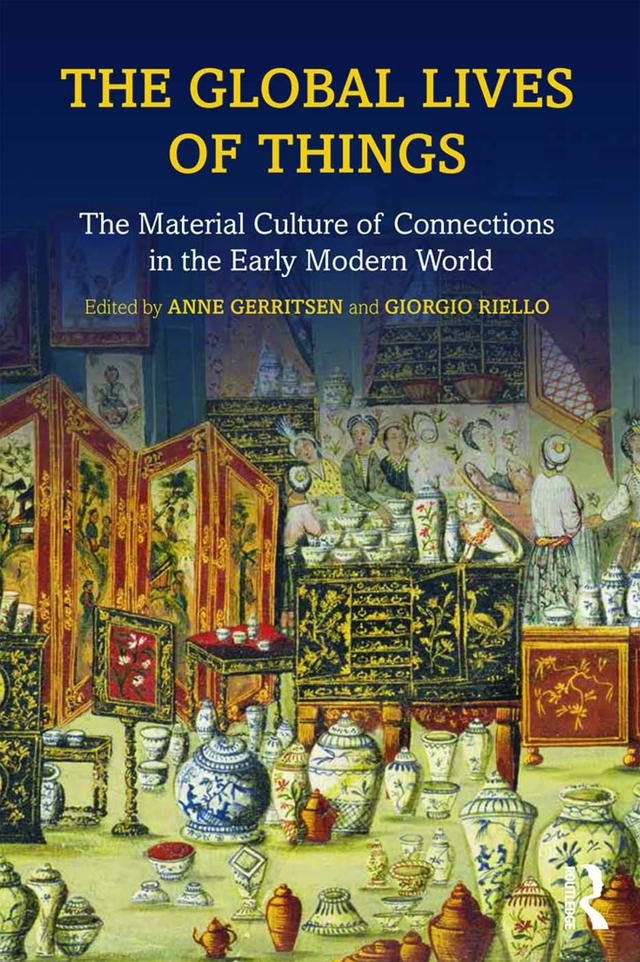
The Global Lives of Things considers the ways in which ‘things’, ranging from commodities to works of art and precious materials, participated in the shaping of global connections in the period 1400-1800. By focusing on the material exchange between Asia, Europe, the Americas and Australia, this volume traces the movements of objects through human networks of commerce, colonialism and consumption. It argues that material objects mediated between the forces of global economic exchange and the constantly changing identities of individuals, as they were drawn into global circuits. It proposes a reconceptualization of early modern global history in the light of its material culture by asking the question: what can we learn about the early modern world by studying its objects?
This exciting new collection draws together the latest scholarship in the study of material culture and offers students a critique and explanation of the notion of commodity and a reinterpretation of the meaning of exchange. It engages with the concepts of ‘proto-globalization’, ‘the first global age’ and ‘commodities/consumption’. Divided into three parts, the volume considers in Part One, Objects of Global Knowledge, in Part Two, Objects of Global Connections, and finally, in Part Three, Objects of Global Consumption. The collection concludes with afterwords from three of the leading historians in the field, Maxine Berg, Suraiya Faroqhi and Paula Findlen, who offer their critical view of the methodologies and themes considered in the book and place its arguments within the wider field of scholarship.
Extensively illustrated, and with chapters examining case studies from Northern Europe to China and Australia, this book will be essential reading for students of global history.
Pay easily by card, Klarna, Apple Pay or Google Pay. Not happy? You always have a 14-day money-back guarantee. Read more in our terms. If you have any questions, email us at hello@memmo.org.
Memmo makes studying easier – wherever you are in the world. We bring your course books and smart study tools together in one place: summaries, quizzes, podcasts and flashcards. Plus Ted, your study buddy who answers anything you wonder. Over 50,000 students already study here – built to help you learn faster and stress less.