
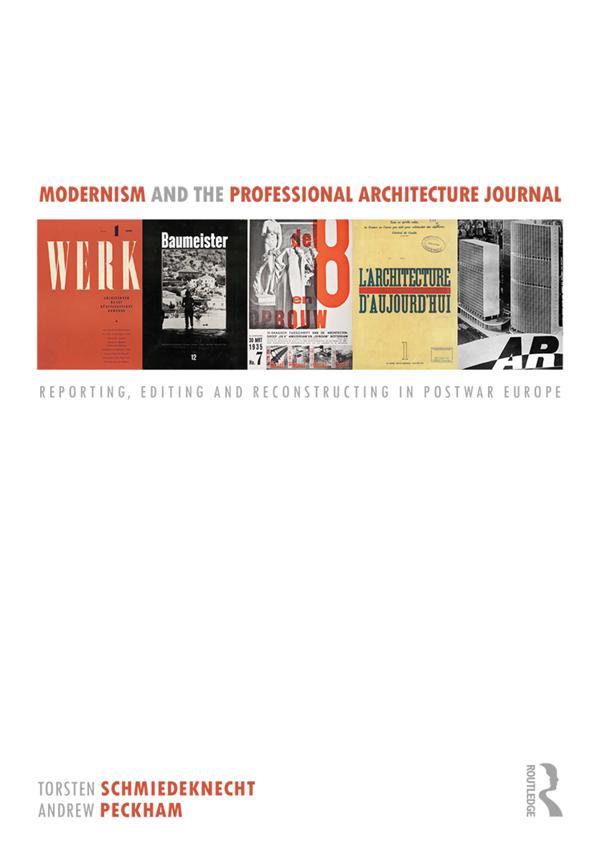
The production of this book stems from two of the editors’ longstanding research interests: the representation of architecture in print media, and the complex identity of the second phase of modernism in architecture given the role it played in postwar reconstruction in Europe.
While the history of postwar reconstruction has been increasingly well covered for most European countries, research investigating postwar architectural magazines and journals across Europe – their role in the discourse and production of the built environment and particularly their inter-relationship and differing conceptions of postwar architecture – is relatively undeveloped. Modernism and the Professional Architecture Journal sounds out this territory in a new collection of essays concerning the second phase of the reception and assimilation of modernism in architecture, as it was represented in professional architecture journals during the period of postwar reconstruction (1945–1968).
Professional architecture journals are often seen as conduits of established facts and knowledge. The role mainstream publications play, however, in establishing ‘movements’, ‘trends’ or ‘debates’ tends to be undervalued. In the context of the complex undertaking of postwar reconstruction, the shortage of resources, political uncertainty and the biographical complexities of individual architects, the chapters on key European architecture journals collected here reveal how modernist architecture, and its discourse, was perceived and disseminated in different European countries.
Pay easily by card, Klarna, Apple Pay or Google Pay. Not happy? You always have a 14-day money-back guarantee. Read more in our terms. If you have any questions, email us at hello@memmo.org.
Memmo makes studying easier – wherever you are in the world. We bring your course books and smart study tools together in one place: summaries, quizzes, podcasts and flashcards. Plus Ted, your study buddy who answers anything you wonder. Over 75,000 students already study here – built to help you learn faster and stress less.