
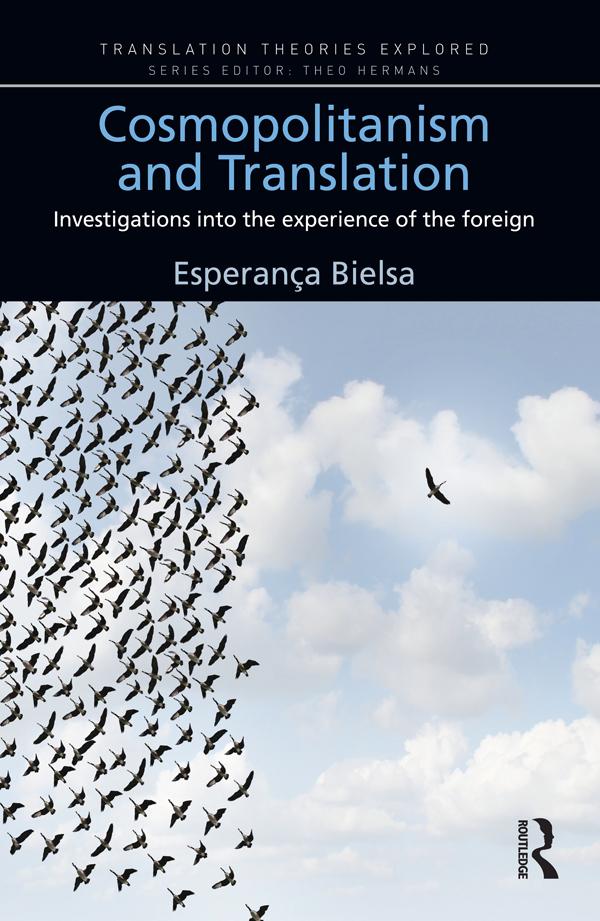
Social theories of the new cosmopolitanism have called attention to the central importance of translation, in areas such as global democracy, human rights and social movements, but translation studies has not engaged systematically with theories of cosmopolitanism.
In Cosmopolitanism and Translation, Esperança Bielsa does just that by focussing on the lived experience of the cosmopolitan stranger, whether a traveller, migrant, refugee or homecomer. With reference to world literature, social theory and foreign news, she argues that this key figure of modernity has a central relevance in the cosmopolitanism debate.
In nine chapters organised into four thematic sections, this book examines:
- theories and insights on "new cosmopolitanism"
- methodological cosmopolitanism
- translation as the experience of the foreign
- the notion of cosmopolitanism as openness to others
- living in translation and the question of the stranger.
With detailed case studies centred on Bolaño, Adorno and Terzani and their work, Cosmopolitanism and Translation places translation at the heart of cosmopolitan theory and makes an essential contribution for students and researchers of both translation studies and social theory.
Pay easily by card, Klarna, Apple Pay or Google Pay. Not happy? You always have a 14-day money-back guarantee. Read more in our terms. If you have any questions, email us at hello@memmo.org.
Memmo makes studying easier – wherever you are in the world. We bring your course books and smart study tools together in one place: summaries, quizzes, podcasts and flashcards. Plus Ted, your study buddy who answers anything you wonder. Over 50,000 students already study here – built to help you learn faster and stress less.