
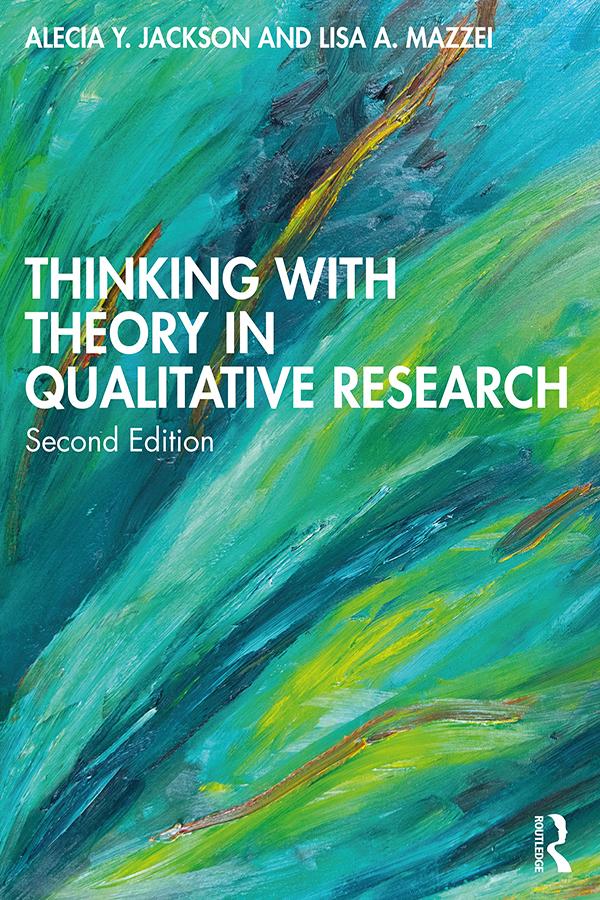
Thinking with Theory in Qualitative Research: Second Edition demonstrates how to enact various philosophical concepts in practices of inquiry, effectively opening up the process of thought in qualitative studies.
Thinking with Theory in Qualitative Research functions as a refusal of pregiven method, intensifying creativity, experimentation, and newness. Readers are invited into the threshold of theory to traverse philosophers and their concepts, reorienting conventional approaches to inquiry. Each chapter presents a thinking with process as a way of reading intensively through plugging in performative accounts of two first-generation academic women to philosophical concepts from Derrida, Spivak, Foucault, Butler, Barad, and Deleuze and Guattari. This book is a deliberate attempt to unsettle what is expected to be represented or recognized in terms of both meaning and method in traditional practices of qualitative research, which become unproductive and untenable in this different image of thought.
New to this edition
- Fully revised and rewritten Chapter 1 that introduces the technique of plugging in as contingent, strategic movements of thought. Also new to Chapter 1 is a shift in language away from traditional practices in qualitative research (data and analysis) to performative accounts and becoming-questions
- Fully revised "Thinking with intra-action" chapter, which focuses on Karen Barad’s ontoepistemological framework of agential realism, and the concepts of posthumanist performativity and entangled agencies
- Fully revised and rewritten Chapter 8 that presents plugging in and thinking with as ontological
- Further development of and new material on the "plugging in" technique
- Schematic cues updated and extended for all of the Interludes
In the ten years since the first edition was published, Thinking with Theory in Qualitative Research has become a vanguard text in the field of postfoundational inquiry for its accessible but thorough introductions to philosophically informed inquiry. This book is for experienced and novice researchers, and students in introductory, general, and advanced qualitative inquiry courses, who may also be first-time readers of philosophy. This text will function as an entry into techniques of thinking with a new theoretical vocabulary.
Pay easily by card, Klarna, Apple Pay or Google Pay. Not happy? You always have a 14-day money-back guarantee. Read more in our terms. If you have any questions, email us at hello@memmo.org.
Memmo makes studying easier – wherever you are in the world. We bring your course books and smart study tools together in one place: summaries, quizzes, podcasts and flashcards. Plus Ted, your study buddy who answers anything you wonder. Over 50,000 students already study here – built to help you learn faster and stress less.