
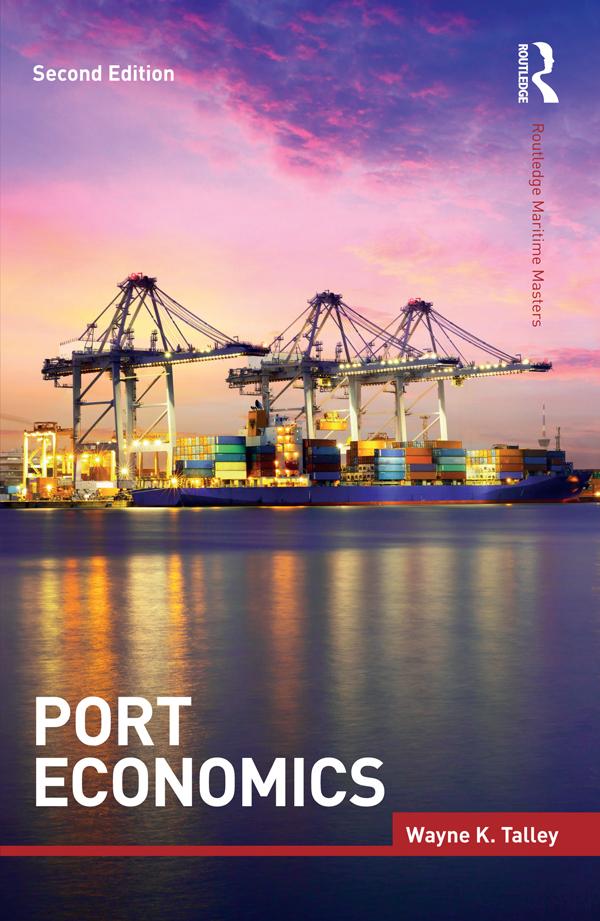
Port Economics is the study of the economic decisions (and their consequences) of the users and providers of port services. A port works as an "engine" for economic development. This book provides a detailed discussion of port freight service users, such as freight water and land carriers, that have their ships and vehicles serviced and their cargoes unloaded by ports, as well as passenger services such as ferry carriers which are serviced by ferry passenger ports.
This text continues to enhance our understanding of port economics by exploring the economic theories, supply and demand curves, and the actual and opportunity costs relating to the carriers, shippers and passengers who use ports.
This new edition has been updated throughout. This includes:
- An expanded discussion of container, break-bulk, dry-bulk, liquid-bulk and neo-bulk ports;
- An introduction of port service chains, hinterland transport chains, maritime transport chains and port multi-service congestion;
- A discussion of seaborne trade, dry ports, port centrality and connectivity and free trade zones.
This updated and comprehensive introduction to port economics will be of benefit to students and researchers in their study of port economics and management. It is also of great importance to professionals who manage and operate ports as well as freight and passenger carriers.
Pay easily by card, Klarna, Apple Pay or Google Pay. Not happy? You always have a 14-day money-back guarantee. Read more in our terms. If you have any questions, email us at hello@memmo.org.
Memmo makes studying easier – wherever you are in the world. We bring your course books and smart study tools together in one place: summaries, quizzes, podcasts and flashcards. Plus Ted, your study buddy who answers anything you wonder. Over 75,000 students already study here – built to help you learn faster and stress less.