
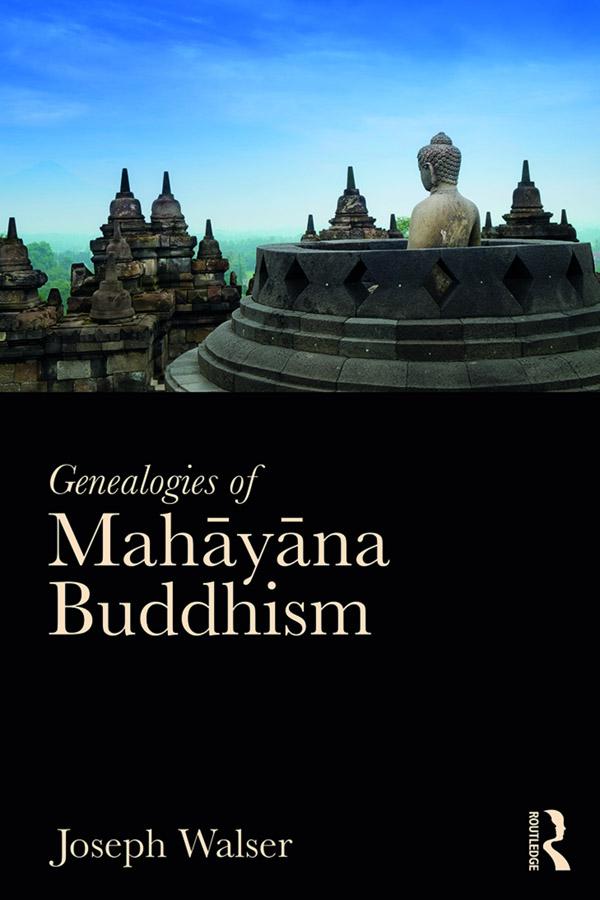
Genealogies of Mahāyāna Buddhism offers a solution to a problem that some have called the holy grail of Buddhist studies: the problem of the “origins” of Mahāyāna Buddhism. In a work that contributes both to a general theory of religion and power for religious studies as well as to the problem of the origin of a Buddhist movement, Walser argues that that it is the neglect of political and social power in the scholarly imagination of the history of Buddhism that has made the origins of Mahāyāna an intractable problem. Walser challenges commonly-held assumptions about Mahāyāna Buddhism, offering a fascinating new take on its genealogy that traces its doctrines of emptiness and mind-only from the present day back to the time before Mahāyāna was “Mahāyāna.” In situating such concepts in their political and social contexts across diverse regimes of power in Tibet, China and India, the book shows that what was at stake in the Mahāyāna championing of the doctrine of emptiness was the articulation and dissemination of court authority across the rural landscapes of Asia.
This text will be will be of interest to undergraduate and postgraduate students and scholars of Buddhism, religious studies, history and philosophy.
Pay easily by card, Klarna, Apple Pay or Google Pay. Not happy? You always have a 14-day money-back guarantee. Read more in our terms. If you have any questions, email us at hello@memmo.org.
Memmo makes studying easier – wherever you are in the world. We bring your course books and smart study tools together in one place: summaries, quizzes, podcasts and flashcards. Plus Ted, your study buddy who answers anything you wonder. Over 50,000 students already study here – built to help you learn faster and stress less.