
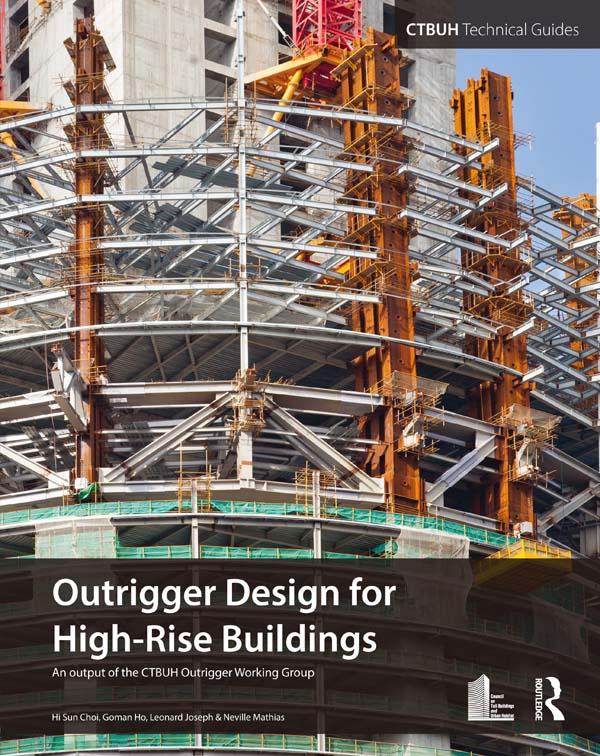
Outrigger systems are rigid horizontal structures designed to improve a building’s stability and strength by connecting the building core or spine to distant columns, much in the way an outrigger can prevent a canoe from overturning. Outriggers have been used in tall, narrow buildings for nearly 500 years, but the basic design principle dates back centuries.
In the 1980s, as buildings grew taller and more ambitious, outrigger systems eclipsed tubular frames as the most popular structural approach for supertall buildings. Designers embraced properly proportioned core-and-outrigger schemes as a method to offer far more perimeter flexibility and openness for tall buildings than the perimeter moment or braced frames and bundled tubes that preceded them. However, the outrigger system is not listed as a seismic lateral load-resisting system in any code, and design parameters are not available, despite the increasingly frequent use of the concept.
The Council on Tall Buildings and Urban Habitat’s Outrigger Working Group has addressed the pressing need for design guidelines for outrigger systems with this guide, a comprehensive overview of the use of outriggers in skyscrapers. This guide offers detailed recommendations for analysis of outriggers within the lateral load-resisting systems of tall buildings, for recognizing and addressing effects on building behavior and for practical design solutions. It also highlights concerns specific to the outrigger structural system such as differential column shortening and construction sequence impacts. Several project examples are explored in depth, illustrating the role of outrigger systems in tall building designs and providing ideas for future projects.
The guide details the impact of outrigger systems on tall building designs, and demonstrates ways in which the technology is continuously advancing to improve the efficiency and stability of tall buildings around the world.
Pay easily by card, Klarna, Apple Pay or Google Pay. Not happy? You always have a 14-day money-back guarantee. Read more in our terms. If you have any questions, email us at hello@memmo.org.
Memmo makes studying easier – wherever you are in the world. We bring your course books and smart study tools together in one place: summaries, quizzes, podcasts and flashcards. Plus Ted, your study buddy who answers anything you wonder. Over 75,000 students already study here – built to help you learn faster and stress less.