
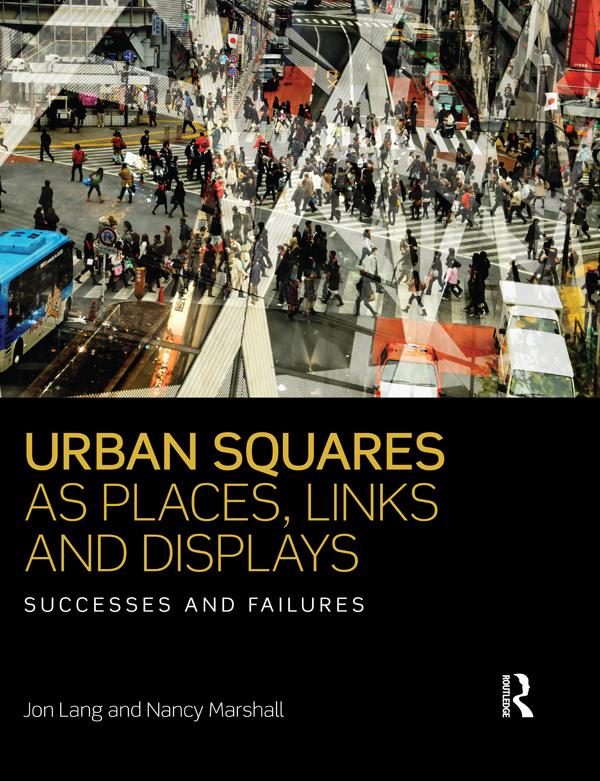
To attract investment and tourists and to enhance the quality of life of their citizens, municipal authorities are paying considerable attention to the quality of the public domain of their cities – including their urban squares. Politicians find them good places for rallies. Children consider squares to be playgrounds, the elderly as places to catch-up with each other, and for many others squares are simply a place to pause for a moment.
Urban Squares as Places, Links and Displays: Successes and Failures discusses how people experience squares and the nature of the people who use them. It presents a ‘typology of squares’ based on the dimensions of ownership, the square’s instrumental functions, and a series of their basic physical attributes including size, degree of enclosure, configuration and organization of the space within them and finally based on their aesthetic attributes – their meanings. Twenty case studies illustrate what works and what does not work in different cities around the world. It discusses the qualities of lively squares and quieter, more restorative places as well as what contributes to making urban squares less desirable as destinations for the general public. The book closes with the policy implications, stressing the importance and difficulties of designing good public places.
Urban Squares offers how-to guidance along with a strong theoretical framework making it ideal for architects, city planners and landscape architects working on the design and upgrade of squares.
Pay easily by card, Klarna, Apple Pay or Google Pay. Not happy? You always have a 14-day money-back guarantee. Read more in our terms. If you have any questions, email us at hello@memmo.org.
Memmo makes studying easier – wherever you are in the world. We bring your course books and smart study tools together in one place: summaries, quizzes, podcasts and flashcards. Plus Ted, your study buddy who answers anything you wonder. Over 75,000 students already study here – built to help you learn faster and stress less.