
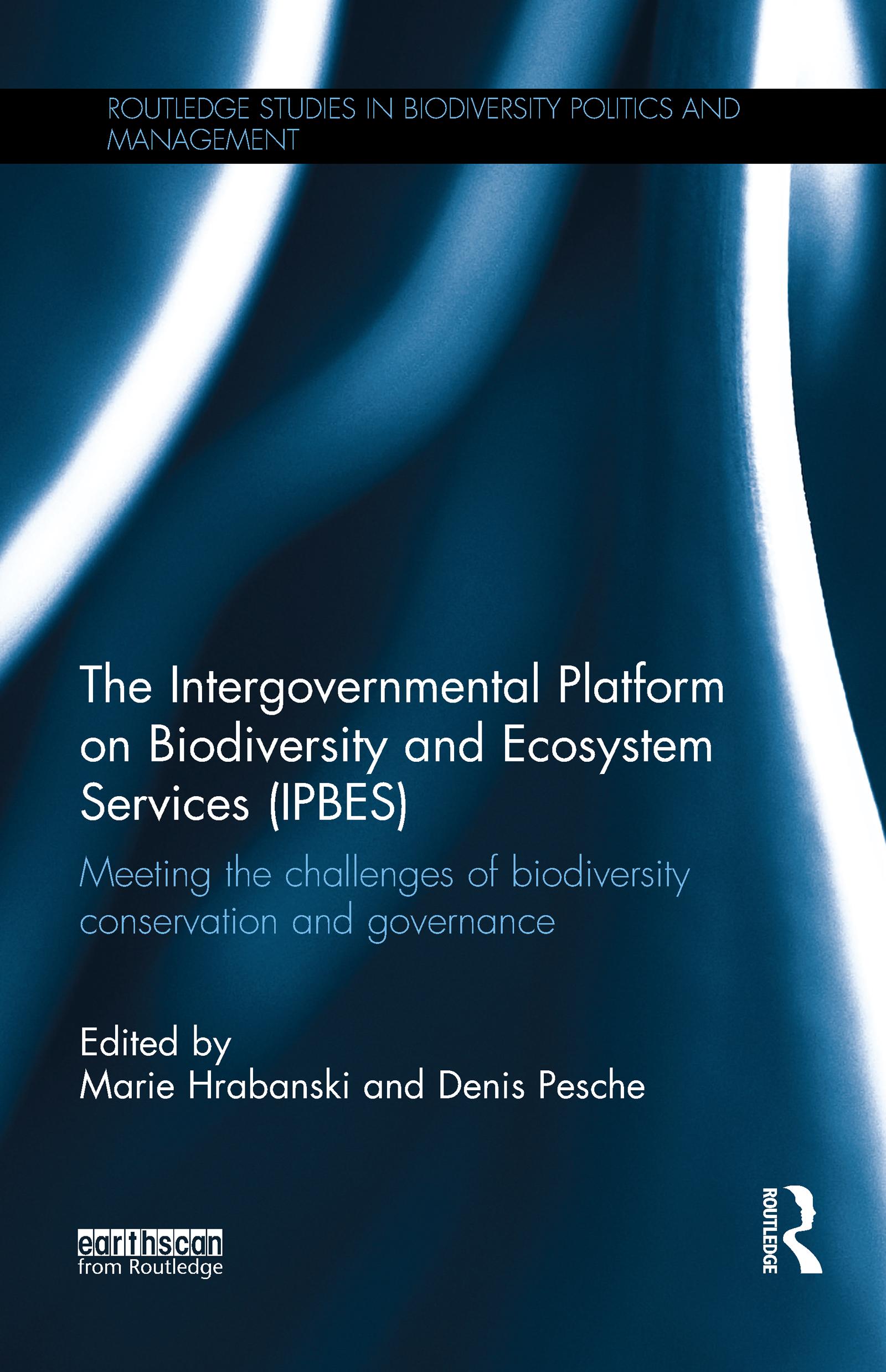
Twenty years after the Convention on Biological Diversity (CBD) entered into force, the founding of the Intergovernmental Platform on Biodiversity and Ecosystem Services (IPBES) in 2012 was the outcome of a long process of setting biodiversity issues at the top of the global environmental agenda. With contributions from more than a dozen well-renowned researchers in political science, law and sociology, this book analyzes IPBES functioning and challenges in terms of the knowledge selection process and actors involved.
The book reveals that, through its conceptual framework, IPBES promotes a pluralistic view of nature that calls for a broadening of the disciplinary frontiers. It combines natural science and social science research and also includes indigenous and local knowledge. IPBES is considered to represent the institutionalization of a permanent knowledge assessment on biodiversity and is often referred to as an IPCC success story, constituting a new stage in global environmental governance. In analyzing the knowledge selection process for IPBES decision making, the book better situates IPBES within the biodiversity and global governance domain. It ultimately argues that the establishment of IPBES provides a new opportunity to coordinate the different international conventions (CBD, RAMSAR, CITES, etc.) and initiatives (international assessment of marine biology, scientific programs, funding, etc.).
Pay easily by card, Klarna, Apple Pay or Google Pay. Not happy? You always have a 14-day money-back guarantee. Read more in our terms. If you have any questions, email us at hello@memmo.org.
Memmo makes studying easier – wherever you are in the world. We bring your course books and smart study tools together in one place: summaries, quizzes, podcasts and flashcards. Plus Ted, your study buddy who answers anything you wonder. Over 50,000 students already study here – built to help you learn faster and stress less.