
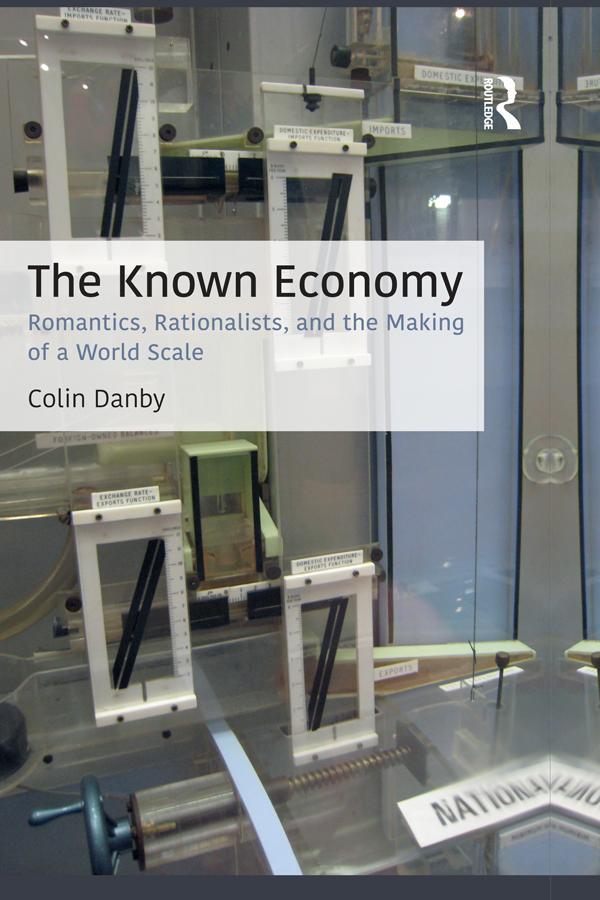
Why do critics and celebrants of globalization concur that international trade and finance represent an inexorable globe-bestriding force with a single logic? The Known Economy shows that both camps rest on the same ideas about how the world is scaled. Two centuries ago romantic and rationalist theorists concurred that the world was divided into discrete nations, moving at different rates toward a "modernity", split between love and money. Though differing over whether this history is tragedy or triumph, they united in projecting an empty "international" space in which a Moloch-like global capitalism could lurk.
The Known Economy tracks the colonial development of national accounting and re-examines the ways gender and heteronormativity are built in to economic representation. It re-interprets the post-WWII spread of standardized economic statistics as the project of international organizations looking over the shoulders of national governments, rather than the expanding power of national governments over populations.
Pay easily by card, Klarna, Apple Pay or Google Pay. Not happy? You always have a 14-day money-back guarantee. Read more in our terms. If you have any questions, email us at hello@memmo.org.
Memmo makes studying easier – wherever you are in the world. We bring your course books and smart study tools together in one place: summaries, quizzes, podcasts and flashcards. Plus Ted, your study buddy who answers anything you wonder. Over 50,000 students already study here – built to help you learn faster and stress less.