
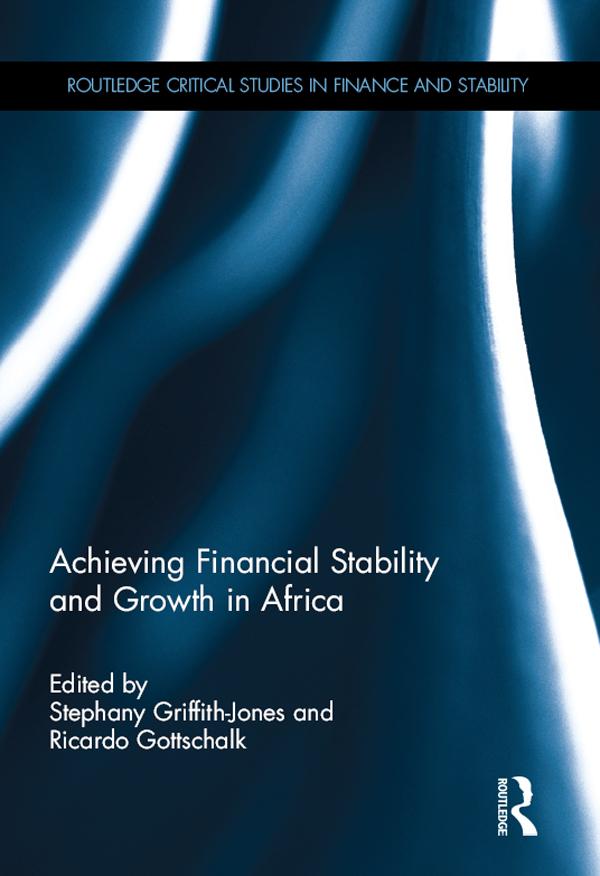
This book explores how the financial system should be regulated and structured to achieve the twin goals of inclusive growth and financial stability, with a focus on African low-income countries (LICs). The subject and content of this book is original in that it attempts to draw on the lessons and radical rethinking on the financial sector in developed and middle income countries, arising in the wake of the international financial crisis. It includes four in- depth country case studies, of Kenya, Ghana, Nigeria and Ethiopia, but also analyses the empirical evidence for Sub-Saharan Africa as a whole, evaluating the relevance (or not) of such major changes for the very different financial sectors and economies in low income countries.
Achieving Financial Stability and Growth in Africa has major academic and policy implications, especially for low income countries, but also more generally, on broader issues. These include the desirable size of the financial sector, as well as more specific issues, such as the high cost of borrowing of small and medium enterprises in LICs, and possible measures to reduce it. Highly topical subjects like the appropriate regulation of the financial sector and management of capital flows are discussed in depth. Though drawing on comprehensive reviews of the literature, this volume has the virtue of the large comparative academic and policy experience of researchers, as well as in-depth case studies, that take account of institutional and economic features of low- income countries.
Written by senior academics and policy-makers, this book is a must read for those researching or participating in the financial sectors of low-income countries, as well as in developed economies. It is also suitable for those who study political economy and public finance.
Pay easily by card, Klarna, Apple Pay or Google Pay. Not happy? You always have a 14-day money-back guarantee. Read more in our terms. If you have any questions, email us at hello@memmo.org.
Memmo makes studying easier – wherever you are in the world. We bring your course books and smart study tools together in one place: summaries, quizzes, podcasts and flashcards. Plus Ted, your study buddy who answers anything you wonder. Over 50,000 students already study here – built to help you learn faster and stress less.