
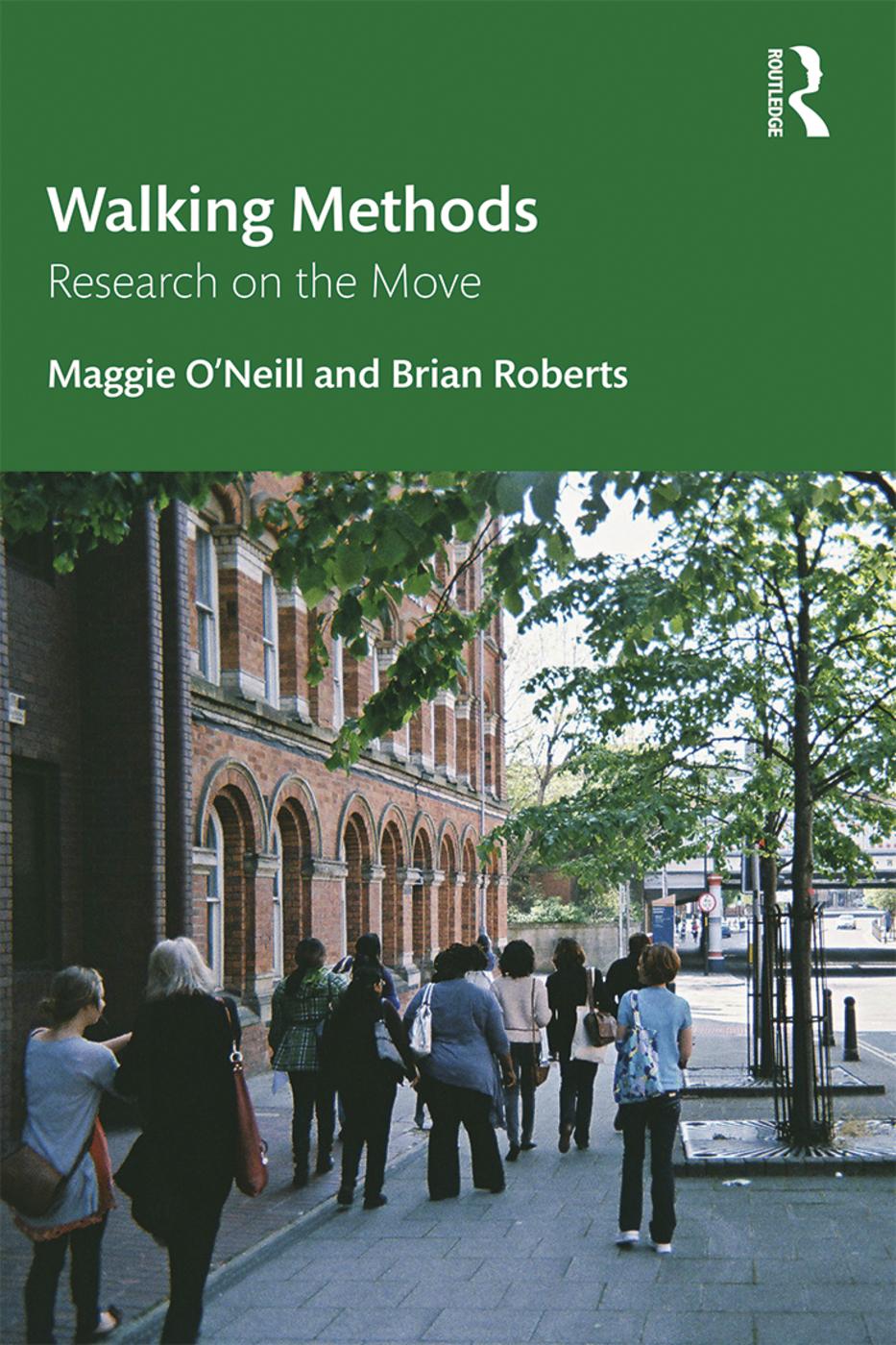
This book introduces and critically explores walking as an innovative method for doing social research, showing how its sensate and kinaesthetic attributes facilitate connections with lived experiences, journeys and memories, communities and identities. The book situates walking methods historically, sociologically, and in relation to biographical and arts-based research, as well as new work on mobilities, the digital, spatial, and the sensory.
The book is organised into three sections: theorising; experiencing; and imagining walking as a new method for doing biographical research. There is a key focus upon the Walking Interview as a Biographical Method (WIBM) on the move to usefully explore migration, memory, and urban landscapes, as part of participatory, visual, and ethnographic research with marginalised communities and artists and as re-formative and transgressive. The book concludes with autobiographical walks taken by the authors and a discussion about the future of the walking interview as biographical method.
Walking Methods combines theory with a series of original ethnographic and participatory research examples. Practical exercises and a guide to using walking as a method help to make this a rich resource for social science researchers, students, walking artists, and biographical researchers.
Pay easily by card, Klarna, Apple Pay or Google Pay. Not happy? You always have a 14-day money-back guarantee. Read more in our terms. If you have any questions, email us at hello@memmo.org.
Memmo makes studying easier – wherever you are in the world. We bring your course books and smart study tools together in one place: summaries, quizzes, podcasts and flashcards. Plus Ted, your study buddy who answers anything you wonder. Over 50,000 students already study here – built to help you learn faster and stress less.