
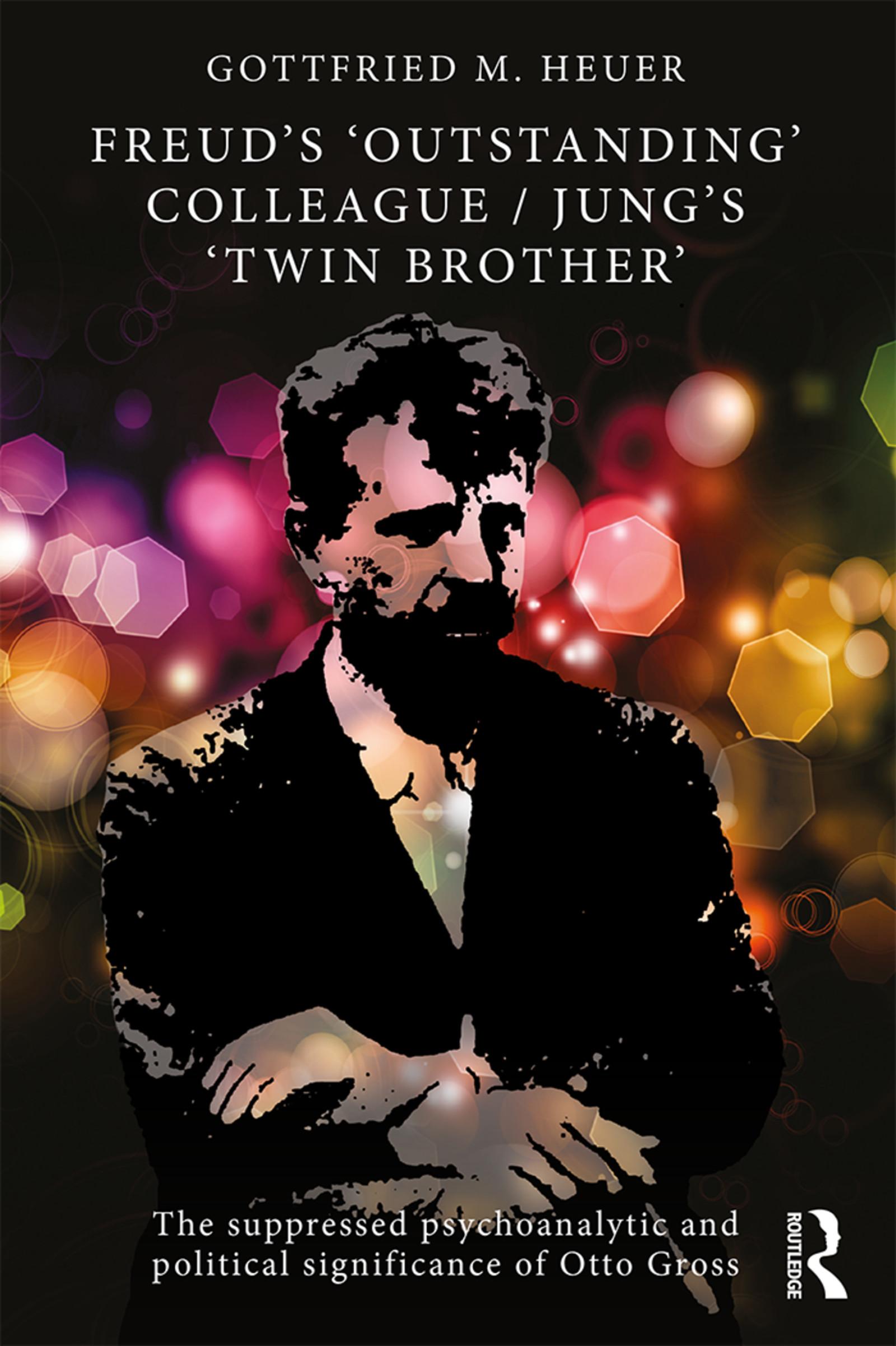
Otto Gross was the first analyst to link his work with radical politics, connecting inner, personal transformation with outer, collective change. Since his death in 1920 his work has been suppressed, despite his seminal influence on the developing analytic discipline and on the fields of sociology, philosophy and literature. Here Gottfried M. Heuer introduces Gross’ life and ideas, using an innovative, historiographic methodology he terms trans-historical: a psychoanalytic, intersubjective, and trans-temporal approach to the past, aimed at ‘healing wounded history’ in the present.
Heuer considers several previously unpublished sources to explore Gross’s ideas and legacy as well as his unusually bohemian life. His use of the anarchist concept of mutuality to develop a relational and intersubjective approach in his own analytic theory and clinical practice was unique, and his work had a lasting, yet unacknowledged, influence on Freud, Jung (with whom he had the first recorded mutual analysis) and many other analysts. His ideas were appropriated by Max Weber, the founder of sociology, and by the philosopher Martin Buber, playing a pivotal role in what we now call ‘modernity’. Heuer also explores Gross’s paradigmatic father/son battle with his father Hans, who established the science of criminology, and touches upon Gross’s links to the literary field of the early 20th century via Kafka, Werfel, et al., German expressionism and the Dada-movement, as well as the Anglo-American world through the work of D. H. Lawrence.
This innovative, multi-faceted approach to Gross’s work and its influence marks a turning point, putting him firmly on the map of the historiography of analysis as well as linking this field with the neighbouring disciplines of the history of law and criminology, literature, sociology and philosophy. In addition, Gross continuing relevance for leading edge clinical and political ideas is addressed. This book will be essential reading for Jungian and Freudian analysts, psychotherapists and counsellors, academics and students of analysis, politics, history, criminology and sociology.
Pay easily by card, Klarna, Apple Pay or Google Pay. Not happy? You always have a 14-day money-back guarantee. Read more in our terms. If you have any questions, email us at hello@memmo.org.
Memmo makes studying easier – wherever you are in the world. We bring your course books and smart study tools together in one place: summaries, quizzes, podcasts and flashcards. Plus Ted, your study buddy who answers anything you wonder. Over 50,000 students already study here – built to help you learn faster and stress less.