
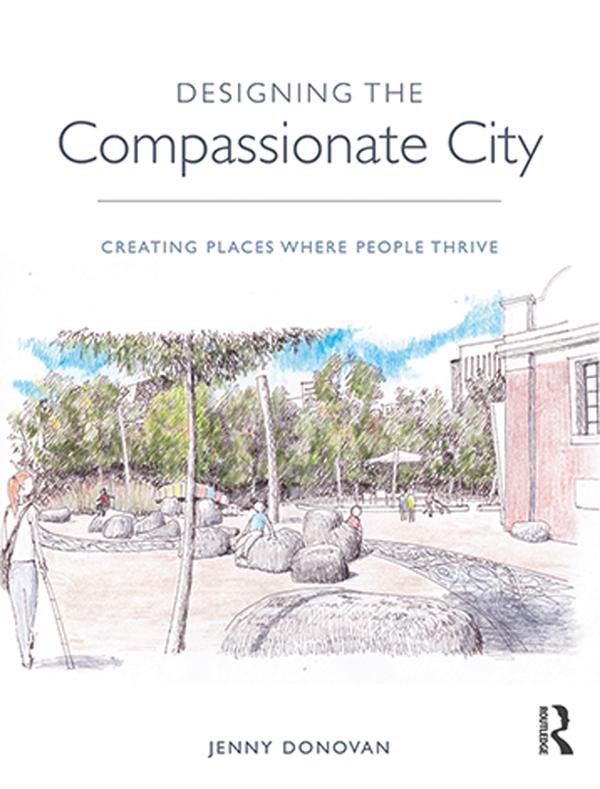
Designing the Compassionate City outlines an approach to urban design that is centred on an explicit recognition of the inherent dignity of all people. It suggests that whether we thrive or decline—as individuals or as a community—is dependent on our ability to fulfil the full spectrum of our needs. This book considers how our surroundings help or hinder us from meeting these needs by influencing both what we can do and what we want to do; either inspiring us to lead healthy, fulfilled lives or consigning us to diminished lives tainted by ill health and unfulfilled potential.
Designing the Compassionate City looks at how those who participate in designing towns and cities can collaborate with those who live in them to create places that help people to accumulate the life lessons, experiences and achievements, as well as forge the connections to meet their needs, to thrive and to fulfil their potential. The book explores a number of inspiring case studies that have sought to meet this challenge and examines what has worked and what hasn’t. From this, some conclusions are drawn about how we can all participate in creating places that leave a lasting legacy of empowerment and commitment to nurturing one another. It is essential reading for students and practitioners designing happier, healthier places.
Pay easily by card, Klarna, Apple Pay or Google Pay. Not happy? You always have a 14-day money-back guarantee. Read more in our terms. If you have any questions, email us at hello@memmo.org.
Memmo makes studying easier – wherever you are in the world. We bring your course books and smart study tools together in one place: summaries, quizzes, podcasts and flashcards. Plus Ted, your study buddy who answers anything you wonder. Over 75,000 students already study here – built to help you learn faster and stress less.