
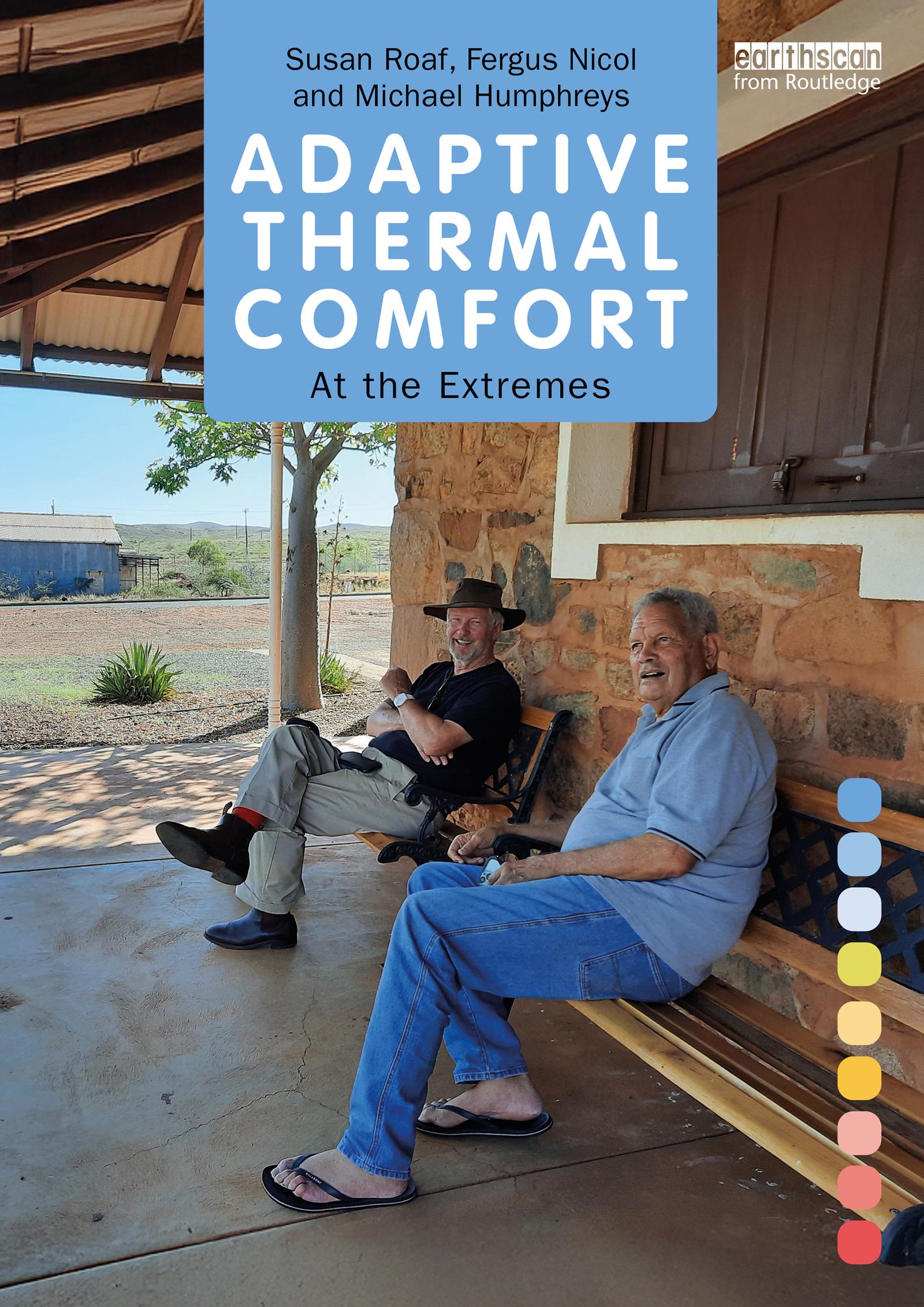
To remain comfortable in a world of ever more extreme weather events and climate trends, we need a building revolution. Building designers, owners, managers, and occupants must prepare now for future climates with new ways to stay comfortable indoors. This book is a compendium of information on comfort that provides an overview of the complexity of the many ways that comfort is achieved in buildings. It outlines the impacts and implications of current design practices on greenhouse gas emissions from buildings and the health and well-being of people in them. In reality, many modern buildings, and particularly homes, are already failing in various ways. During extreme weather events, they overheat. During power outages, many buildings do not even remain habitable. During the COVID pandemic, cross-infections between occupants were rife in buildings like hospitals and hotels without opening windows. As energy prices soared and globally economies flatlined, many found themselves unable to pay for high-cost comfort solutions and so either had to change their lifestyles and expectations or learn to live with discomfort. Underlying many of the growing global problems is the trend towards an overdependence on mechanical systems to produce comfort, coupled with a decrease in the passive climatic performance of the buildings themselves. Both factors are resulting in a generation of increasingly un-resilient buildings.
The theory of adaptive thermal comfort states that people adapt to those temperatures they normally occupy, and if they become uncomfortable, they tend to change themselves or their surroundings to return to comfort, if they are able or can afford to. This is the third of three volumes, which builds on the practical and theoretical foundations of the subject laid out in the first two volumes. It builds on their premises to shape a new and better roadmap going forward for imagining, designing, and constructing adaptable buildings, and for the behavioural lifestyle changes needed to prepare humanity to survive and thrive comfortably in the very different weather and climates ahead.
Pay easily by card, Klarna, Apple Pay or Google Pay. Not happy? You always have a 14-day money-back guarantee. Read more in our terms. If you have any questions, email us at hello@memmo.org.
Memmo makes studying easier – wherever you are in the world. We bring your course books and smart study tools together in one place: summaries, quizzes, podcasts and flashcards. Plus Ted, your study buddy who answers anything you wonder. Over 75,000 students already study here – built to help you learn faster and stress less.