
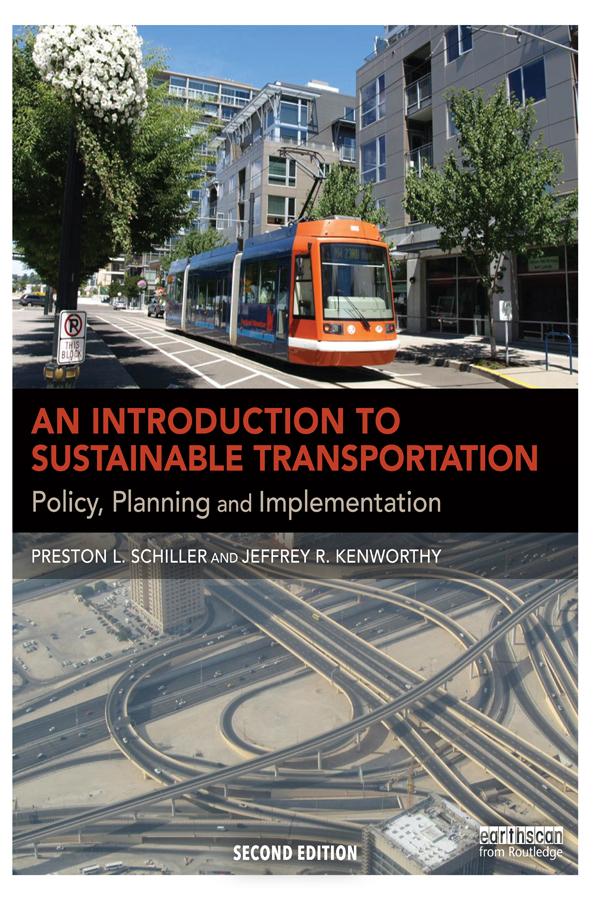
Cities around the globe struggle to create better and more equitable access to important destinations and services, all the while reducing the energy consumption and environmental impacts of mobility. An Introduction to Sustainable Transportation illustrates a new planning paradigm for sustainable transportation through case studies from around the world with hundreds of valuable resources and references, color photos, graphics and tables.
The second edition builds and expands upon the highly acclaimed first edition, with new chapters on urban design and urban, regional and intercity public transportation, as well as expanded chapters on automobile dependence and equity issues; automobile cities and the car culture; the history of sustainable and unsustainable transportation; the interrelatedness of technologies, infrastructure energy and functionalities; and public policy and public participation and exemplary places, people and programs around the globe. Among the many valuable additions are discussions of autonomous vehicles (AVs), electric vehicles (EVs), airport cities, urban fabrics, urban heat island effects and mobility as a service (MaaS). New case studies show global exemplars of sustainable transportation, including several from Asia, a case study of participative and deliberative public involvement, as well as one describing life in the Vauban ecologically planned community of Freiburg, Germany. Students in affiliated sustainability disciplines, planners, policymakers and concerned citizens will find many provides practical techniques to innovate and transform transportation.
Pay easily by card, Klarna, Apple Pay or Google Pay. Not happy? You always have a 14-day money-back guarantee. Read more in our terms. If you have any questions, email us at hello@memmo.org.
Memmo makes studying easier – wherever you are in the world. We bring your course books and smart study tools together in one place: summaries, quizzes, podcasts and flashcards. Plus Ted, your study buddy who answers anything you wonder. Over 75,000 students already study here – built to help you learn faster and stress less.