
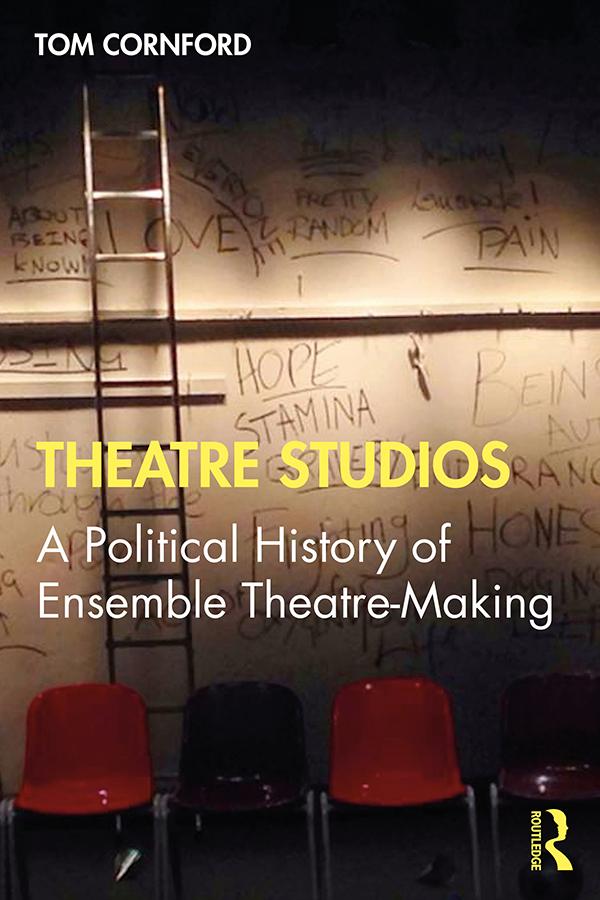
Theatre Studios explores the history of the studio model in England, first established by Konstantin Stanislavsky, Jacques Copeau and others in the early twentieth century, and later developed in the UK primarily by Michel Saint-Denis, George Devine, Michael Chekhov and Joan Littlewood, whose studios are the focus of this study.
Cornford offers in-depth accounts of the radical, collective work of these leading theatre companies of the mid-twentieth century, considering the models of ensemble theatre-making that they developed and their remnants in the newly publicly-funded UK theatre establishment of the 1960s. In the process, this book develops an approach to understanding the politics of artistic practices rooted in the work of John Dewey, Antonio Gramsci and the standpoint feminists. It concludes by considering the legacy of the studio movement for twenty-first-century theatre, partly by tracking its echoes in the work of Secret Theatre at the Lyric, Hammersmith (2013–2015).
Students and makers of theatre alike will find in this book a provocative and illuminating analysis of the politics of performance-making and a history of the theatre as a site for developing counterhegemonic, radically democratic, anti-individualist forms of cultural production.
Pay easily by card, Klarna, Apple Pay or Google Pay. Not happy? You always have a 14-day money-back guarantee. Read more in our terms. If you have any questions, email us at hello@memmo.org.
Memmo makes studying easier – wherever you are in the world. We bring your course books and smart study tools together in one place: summaries, quizzes, podcasts and flashcards. Plus Ted, your study buddy who answers anything you wonder. Over 75,000 students already study here – built to help you learn faster and stress less.