
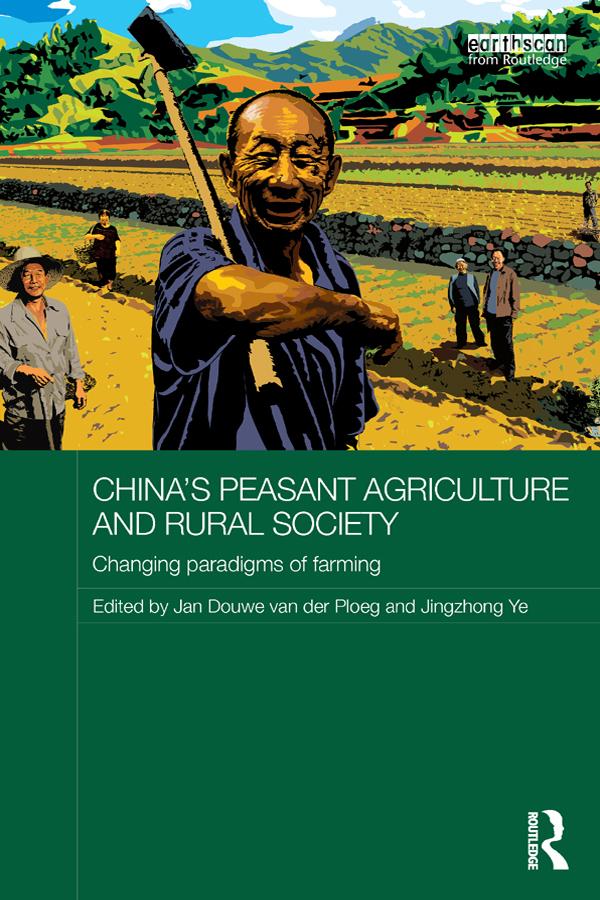
China's agriculture and rural society has undergone rapid changes in recent years. Many poorer farmers and younger people have moved to cities, and yet China has an immense challenge to feed a growing and more affluent population. This book provides a ‘bottom-up view’ of China’s agriculture, showing how the many millions of Chinese peasants make a living. It presents a vivid description of the mechanisms used by rural households to defend and sustain their livelihoods, increase their agricultural production and improve the quality of their lives.
The authors examine the newly emerging trajectories of entrepreneurial and capitalist farming and assess whether such alternatives will be able to meet the enormous social, economic and environmental challenges that China faces. The book also explores the paradigm that has underpinned the organisation and development of China’s agriculture from ancient times to the present day. This shows the importance of balancing in the Chinese model as compared to the one-sided imposition of continual modernization in the western model. It is argued that such balancing is at the core of the current Sannong policy, referring to the three ruralities of food sovereignty, wellbeing for peasant households and an attractive countryside.
Pay easily by card, Klarna, Apple Pay or Google Pay. Not happy? You always have a 14-day money-back guarantee. Read more in our terms. If you have any questions, email us at hello@memmo.org.
Memmo makes studying easier – wherever you are in the world. We bring your course books and smart study tools together in one place: summaries, quizzes, podcasts and flashcards. Plus Ted, your study buddy who answers anything you wonder. Over 50,000 students already study here – built to help you learn faster and stress less.