
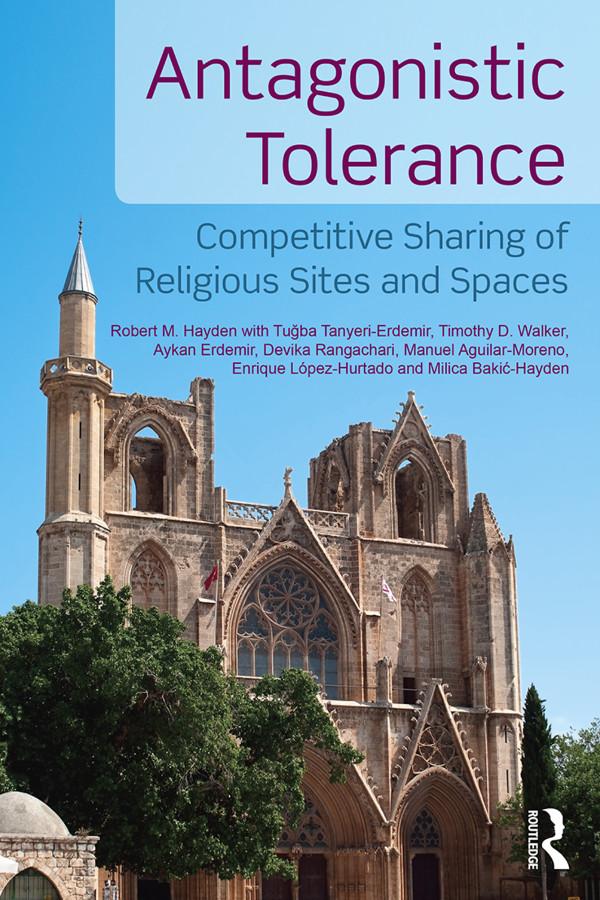
Antagonistic Tolerance examines patterns of coexistence and conflict amongst members of different religious communities, using multidisciplinary research to analyze groups who have peacefully intermingled for generations, and who may have developed aspects of syncretism in their religious practices, and yet have turned violently on each other. Such communities define themselves as separate peoples, with different and often competing interests, yet their interaction is usually peaceable provided the dominance of one group is clear. The key indicator of dominance is control over central religious sites, which may be tacitly shared for long periods, but later contested and even converted as dominance changes. By focusing on these shared and contested sites, this volume allows for a wider understanding of relations between these communities.
Using a range of ethnographic, historical and archaeological data from the Balkans, India, Mexico, Peru, Portugal and Turkey, Antagonistic Tolerance develops a comparative model of the competitive sharing and transformation of religious sites. These studies are not considered as isolated cases, but are instead woven into a unified analytical framework which explains how long-term peaceful interactions between religious communities can turn conflictual and even result in ethnic cleansing.
Pay easily by card, Klarna, Apple Pay or Google Pay. Not happy? You always have a 14-day money-back guarantee. Read more in our terms. If you have any questions, email us at hello@memmo.org.
Memmo makes studying easier – wherever you are in the world. We bring your course books and smart study tools together in one place: summaries, quizzes, podcasts and flashcards. Plus Ted, your study buddy who answers anything you wonder. Over 50,000 students already study here – built to help you learn faster and stress less.