
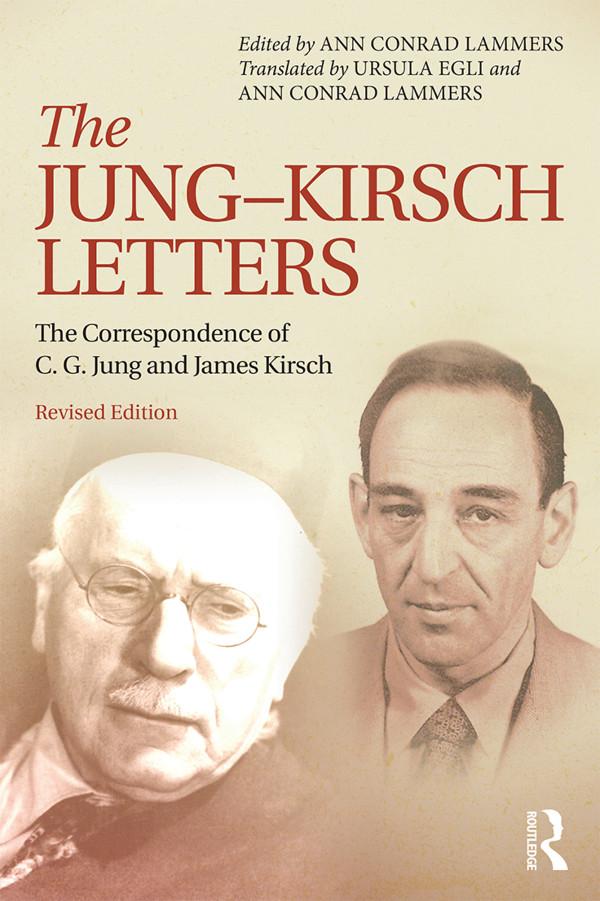
This book charts Carl Gustav Jung’s 33-year (1928-61) correspondence with James Kirsch, adding depth and complexity to the previously published record of the early Jungian movement. Kirsch was a German-Jewish psychiatrist, a first-generation follower of Jung, who founded Jungian communities in Berlin, Tel Aviv, London, and Los Angeles. Their letters tell of heroic survival, brilliant creativity, and the building of generative institutions, but these themes are darkened by personal and collective shadows.
The Nazi era looms over the first half of the book, shaping the story in ways that were fateful not only for Kirsch and his career but also for Jung and his. Kirsch trained with Jung and acted as a tutor in Jewish psychology and culture to him. In 1934, fearing that anti-Semitism had seized his teacher, Kirsch challenged Jung to explain some of his publications for the Nazi-dominated Medical Society for Psychotherapy. Jung’s answer convinced Kirsch of his sincerity, and from then on Kirsch defended him fiercely against any allegation of anti-Semitism.
We also witness Kirsch’s lifelong struggle with states of archetypal possession: his identification with the interior God-image on the one hand, and with unconscious feminine aspects of his psyche on the other. These complexes were expressed, for Kirsch, in physical symptoms and emotional dilemmas, and they led him into clinical boundary violations which were costly to his analysands, his family and himself.
The text of these historical documents is translated with great attention to style and accuracy, and generous editorial scaffolding gives glimpses into the writers’ world. Four appendices are included: two essays by Kirsch, a series of letters between Hilde Kirsch and Jung, and a brief, incisive essay on the Medical Society for Psychotherapy. This revised edition includes primary material that was unavailable when the book was first published, as well as updated footnotes and minor corrections to the translated letters.
Pay easily by card, Klarna, Apple Pay or Google Pay. Not happy? You always have a 14-day money-back guarantee. Read more in our terms. If you have any questions, email us at hello@memmo.org.
Memmo makes studying easier – wherever you are in the world. We bring your course books and smart study tools together in one place: summaries, quizzes, podcasts and flashcards. Plus Ted, your study buddy who answers anything you wonder. Over 50,000 students already study here – built to help you learn faster and stress less.