
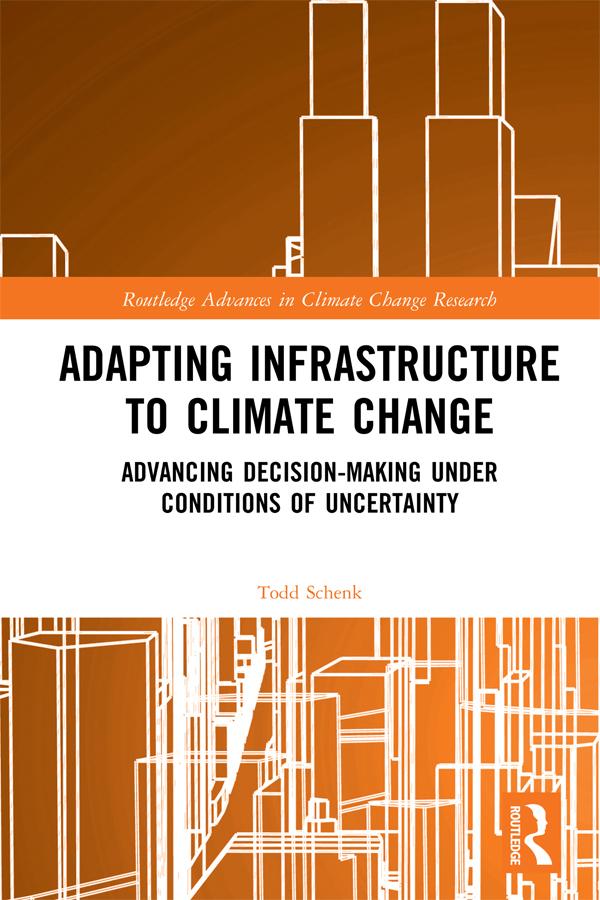
Many of the challenges that decision-makers grapple with in relation to climate change are governance related. Planning and decision-making is evolving in ambiguous institutional environments, in which many key issues remain unresolved, including relationships between different actors; funding arrangements; and the sources and procedures for vetting data. These issues are particularly acute at this juncture, as climate adaptation moves from broad planning processes to the management of infrastructure systems. Concrete decisions must be made.
Adapting Infrastructure to Climate Change draws on case studies of three coastal cities situated within very different governance regimes: neo-corporatist Rotterdam, neo-pluralist Boston and semi-authoritarian Singapore. The book examines how infrastructure managers and other stakeholders grappling with complex and uncertain climate risks are likely to make project-level decisions in practice, and how more effective decision-making can be supported. The differences across governance regimes are currently unaccounted for in adaptation planning, but are crucial as best practices are devised. These lessons are also applicable to infrastructure planning and decision-making in other contexts.
This book will be of great interest to scholars of climate change and environmental policy and governance, particularly in the context of infrastructure management.
Pay easily by card, Klarna, Apple Pay or Google Pay. Not happy? You always have a 14-day money-back guarantee. Read more in our terms. If you have any questions, email us at hello@memmo.org.
Memmo makes studying easier – wherever you are in the world. We bring your course books and smart study tools together in one place: summaries, quizzes, podcasts and flashcards. Plus Ted, your study buddy who answers anything you wonder. Over 75,000 students already study here – built to help you learn faster and stress less.