
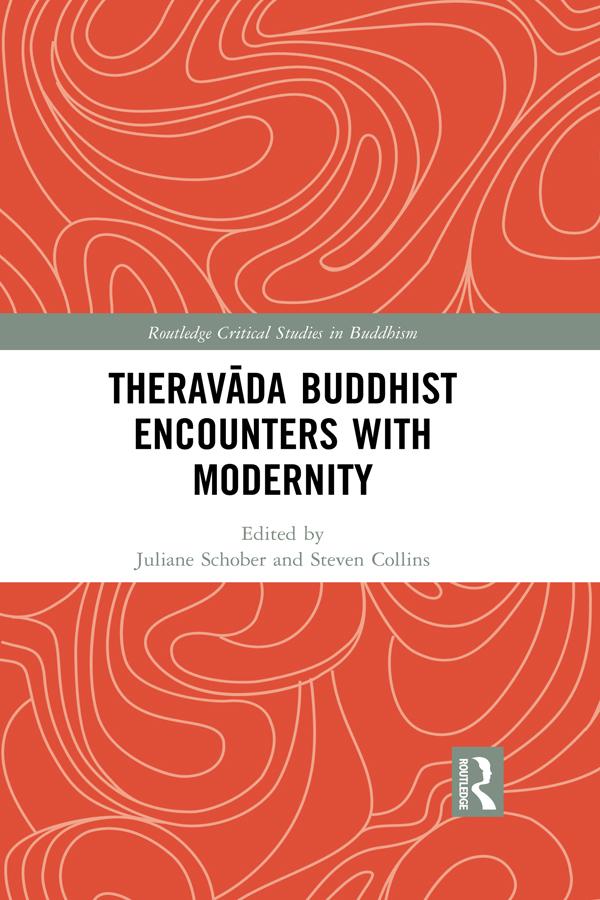
Although recent scholarship has shown that the term ‘Theravāda’ in the familiar modern sense is a nineteenth- and twentieth-century construct, it is now used to refer to the more than 150 million people around the world who practice that form of Buddhism. Buddhist practices such as meditation, amulets, and merit making rituals have always been inseparable from the social formations that give rise to them, their authorizing discourses and the hegemonic relations they create.
This book is composed of chapters written by established scholars in Buddhist studies who represent diverse disciplinary approaches from art history, religious studies, history and ethnography. It explores the historical forces, both external to and within the tradition of Theravāda Buddhism and discusses how modern forms of Buddhist practice have emerged in South and Southeast Asia, in case studies from Nepal to Sri Lanka, Burma, Cambodia and Southwest China. Specific studies contextualize general trends and draw on practices, institutions, and communities that have been identified with this civilizational tradition throughout its extensive history and across a highly diverse cultural geography.
This book foreground diverse responses among Theravādins to the encroaching challenges of modern life ways, communications, and political organizations, and will be of interest to scholars of Asian Religion, Buddhism and South and Southeast Asian Studies.
Pay easily by card, Klarna, Apple Pay or Google Pay. Not happy? You always have a 14-day money-back guarantee. Read more in our terms. If you have any questions, email us at hello@memmo.org.
Memmo makes studying easier – wherever you are in the world. We bring your course books and smart study tools together in one place: summaries, quizzes, podcasts and flashcards. Plus Ted, your study buddy who answers anything you wonder. Over 50,000 students already study here – built to help you learn faster and stress less.