
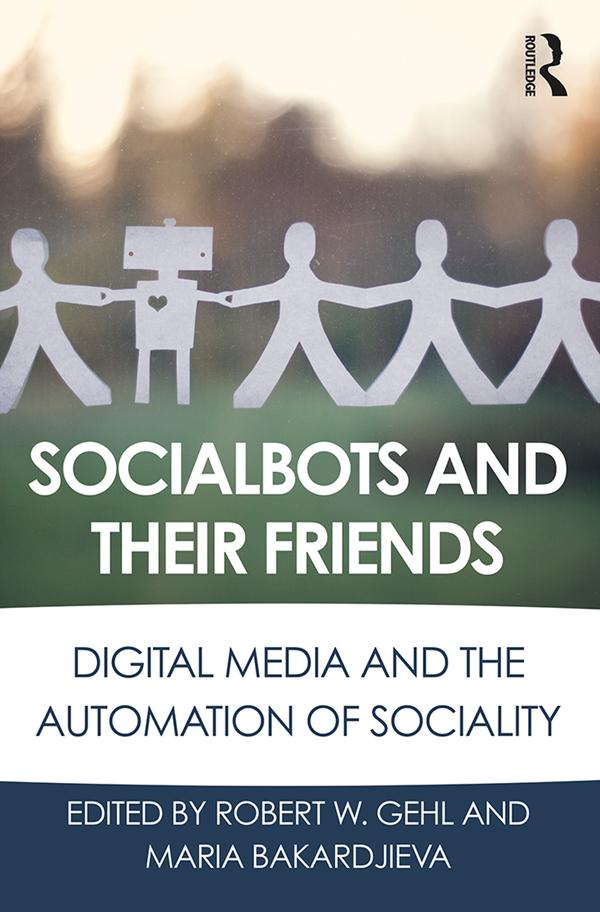
Many users of the Internet are aware of bots: automated programs that work behind the scenes to come up with search suggestions, check the weather, filter emails, or clean up Wikipedia entries. More recently, a new software robot has been making its presence felt in social media sites such as Facebook and Twitter – the socialbot. However, unlike other bots, socialbots are built to appear human. While a weatherbot will tell you if it's sunny and a spambot will incessantly peddle Viagra, socialbots will ask you questions, have conversations, like your posts, retweet you, and become your friend. All the while, if they're well-programmed, you won't know that you're tweeting and friending with a robot.
Who benefits from the use of software robots? Who loses? Does a bot deserve rights? Who pulls the strings of these bots? Who has the right to know what about them? What does it mean to be intelligent? What does it mean to be a friend? Socialbots and Their Friends: Digital Media and the Automation of Sociality is one of the first academic collections to critically consider the socialbot and tackle these pressing questions.
Pay easily by card, Klarna, Apple Pay or Google Pay. Not happy? You always have a 14-day money-back guarantee. Read more in our terms. If you have any questions, email us at hello@memmo.org.
Memmo makes studying easier – wherever you are in the world. We bring your course books and smart study tools together in one place: summaries, quizzes, podcasts and flashcards. Plus Ted, your study buddy who answers anything you wonder. Over 50,000 students already study here – built to help you learn faster and stress less.