
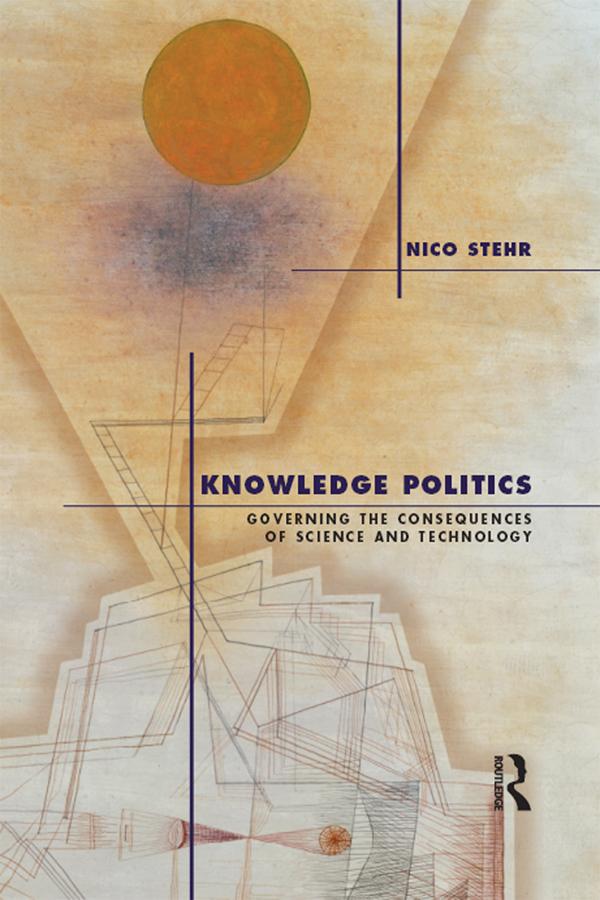
This book argues that new technologies and society's response to them have created a relatively new phenomenon, "knowledge politics." Nico Stehr describes Western society's response to a host of new technologies developed only since the 1970s, including genetic experiments, test-tube human conception, recombinant DNA, and embryonic stem cells; genetically engineered foods; neurogenetics and genetic engineering; and reproductive cloning and the reconstruction of the human ancestral genome. He looks also at the prospective fusion of nanotechnology, biotechnology, information technology, transgenic human engineering, and cognitive science whose products may, as its boosters claim, some day cure disease, slow the aging process, eliminate pollution, and generally enhance human performance. Knowledge Politics shows how human civilization has reached a new era of concern about the life-altering potentials of new technologies. Concerns about the societal consequences of an unfettered expansion of (natural) scientific knowledge are being raised more urgently and are moving to the center of disputes in society-- and thus to the top of the political agenda. Stehr explains the ramifications of knowledge politics and the approaches society could take to resolve difficult questions and conflicts over present and future scientific innovation.
Pay easily by card, Klarna, Apple Pay or Google Pay. Not happy? You always have a 14-day money-back guarantee. Read more in our terms. If you have any questions, email us at hello@memmo.org.
Memmo makes studying easier – wherever you are in the world. We bring your course books and smart study tools together in one place: summaries, quizzes, podcasts and flashcards. Plus Ted, your study buddy who answers anything you wonder. Over 50,000 students already study here – built to help you learn faster and stress less.
You might also like
Buy the book0