
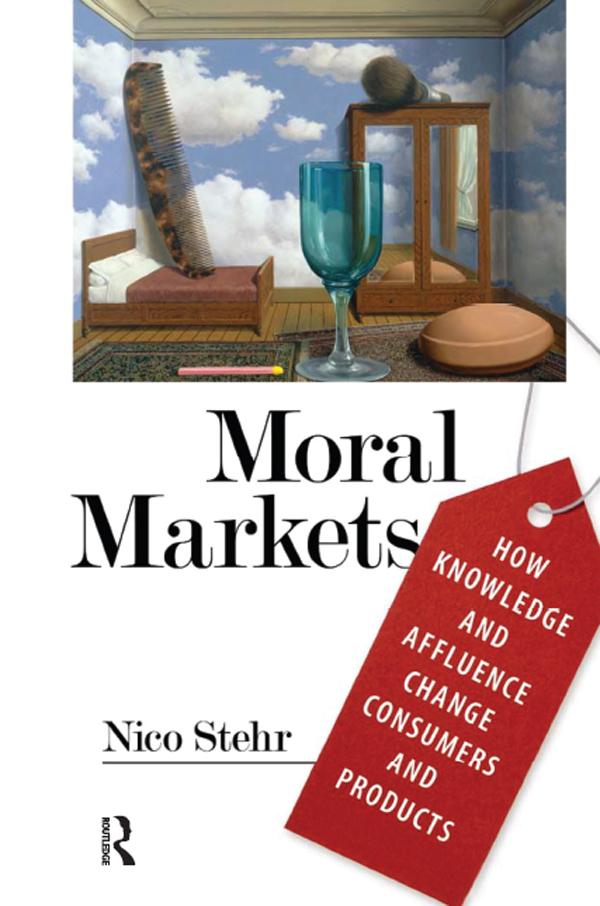
Nothing affects modern society more than the decisions made in the marketplace, especially (but not only) the judgments of consumers. Stehr's designation of a new stage in modern societies with the term "moral markets" signals a further development in the social evolution of markets. Market theories still widely in use today emerged in a society that no longer exists. Consumers were hardly in evidence at all in early theories of the market. Today, growing affluence, greater knowledge, and high-speed communication among consumers builds into the marketplace notions of fairness, solidarity, environment, health, and political considerations imbued with a long-term perspective that can disrupt short-term pursuits of the best buy. Importantly, such social goals, individual apprehensions, and modes of consumer conduct become inscribed today in products and services offered in the marketplace, as well as in the rules and regulations that govern market relations. Stehr uses examples to illustrate these trends and build new theory fitting today's changing consumerism.
Pay easily by card, Klarna, Apple Pay or Google Pay. Not happy? You always have a 14-day money-back guarantee. Read more in our terms. If you have any questions, email us at hello@memmo.org.
Memmo makes studying easier – wherever you are in the world. We bring your course books and smart study tools together in one place: summaries, quizzes, podcasts and flashcards. Plus Ted, your study buddy who answers anything you wonder. Over 50,000 students already study here – built to help you learn faster and stress less.
You might also like
Buy the book0